Health insurance premiums are expected to see a significant increase in the coming months, sparking renewed discussions among progressive advocates about more affordable alternatives. Recent reports indicate that the cost of health insurance is predicted to “on track for their biggest jump in at least five years,” which many attribute to the policies of congressional Republicans and actions taken by former President Donald Trump.
According to new research from KFF highlighted by The Washington Post, individuals obtaining insurance through the Affordable Care Act could face premium increases of over 75% unless Congress intervenes to renew enhanced subsidies initially enacted under the American Rescue Plan in 2021. Congressional Democrats have issued a strong stance, stating they will block government funding beyond an imminent deadline unless a bipartisan agreement is reached to extend these crucial health insurance tax credits.
The increase in insurance prices is reportedly also influenced by uncertainty stemming from Trump’s trade policies. Although tariffs on pharmaceutical imports have not yet been implemented, the Commerce Department is actively reviewing their potential impacts, and Trump has indicated these tariffs could reach as much as 250%. This anticipated uncertainty has led some insurers to disclose in legal filings that expected tariffs are contributing to rising costs. A document from United Healthcare of New York specifically noted a 3.6% price increase incorporated into their rate filings to address potential tariff impacts on pharmaceuticals.
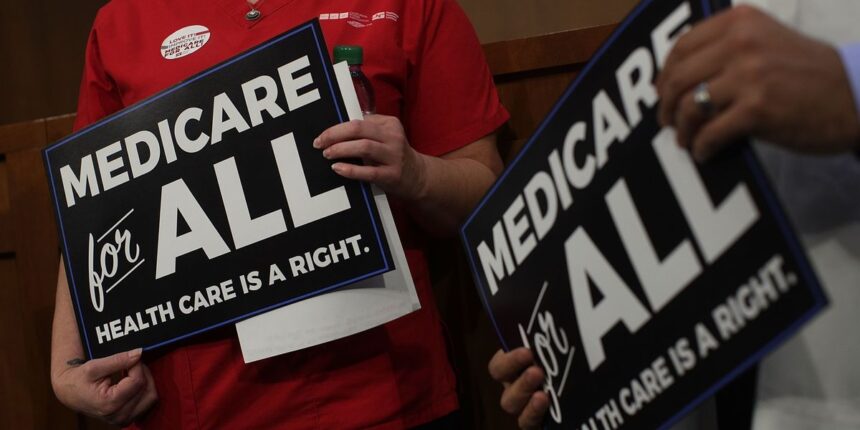
As these critical developments unfold, advocates of Medicare for All are urging the public to reconsider the current healthcare model. Former US Labor Secretary Robert Reich pointed out that as Americans brace for the largest health insurance cost hike in 15 years, the six largest health insurers reported over $31 billion in net income the previous year. He questioned the need for a healthcare system that allows such profit margins while more affordable options remain on the table.
Warren Gunnels, an aide to Senator Bernie Sanders, referenced analyses from the Congressional Budget Office and Yale, arguing that transitioning to Medicare for All could result in significant savings. He emphasized that this approach could save $650 billion annually and prevent 68,000 deaths, providing comprehensive healthcare coverage without premiums, deductibles, or co-payments.
Melanie D’Arrigo, the executive director of Campaign for New York Health, further reinforced the argument for Medicare for All, asserting that the program would render the private insurance sector obsolete. She stressed that health insurance acts merely as a financial barrier to accessing necessary healthcare, benefitting profit margins over patient needs.
In response to the alarming trend of rising insurance costs, Representative Ro Khanna succinctly reiterated calls for immediate implementation of Medicare for All, highlighting the urgency of reform in the current healthcare landscape. As deliberations continue in Congress, the health insurance rate hikes could serve as a pivotal moment in the ongoing discourse around universal healthcare solutions.