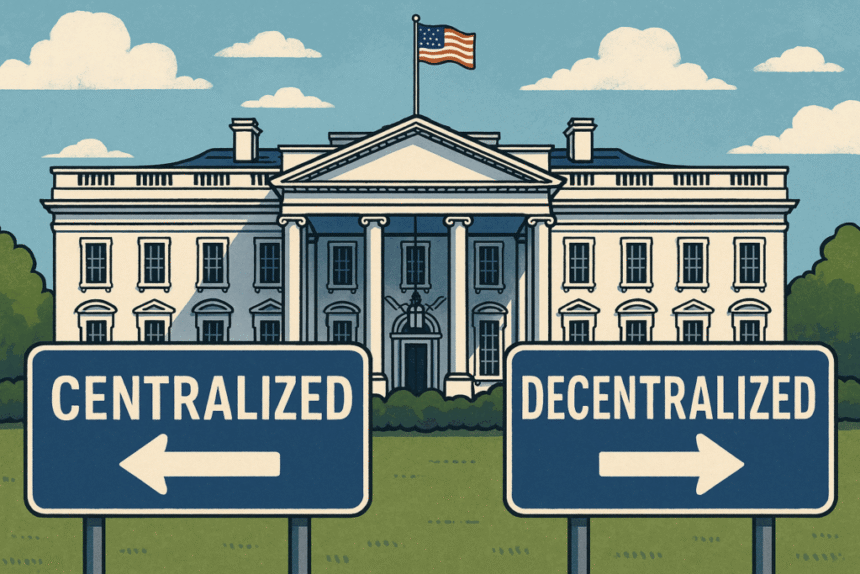
As Bo Hines concluded his term as Executive Director of the President’s Council of Advisors for Digital Assets, he and David Sacks, the White House A.I. and Crypto Czar, took credit for establishing the U.S. as the leading player in the cryptocurrency space. However, Hines’ eight-month tenure is marked by significant advancements primarily benefiting centralized finance (CeFi) entities, notably exemplified by the passage of the GENIUS Act in July. This legislation has been criticized for favoring centralized stablecoin firms such as Circle, rather than promoting decentralized finance (DeFi).
Hines vacated his role for a lucrative position with a centralized cryptocurrency company, leaving behind a regulatory landscape that many argue constrains decentralization in favor of CeFi. His successor, Patrick Witt, promoted from deputy director, faces the critical task of understanding and advocating for decentralization. The consensus among experts highlights that the core of cryptocurrency’s potential lies in its decentralized nature.
The GENIUS Act has set stringent requirements around who can issue stablecoins in the United States, effectively favoring established companies like Circle, which has created a significant market presence with its USDC stablecoin. To gain permission to operate, companies must meet comprehensive regulatory standards, including compliance programs related to anti-money laundering and ongoing audits. While theoretically, decentralized entities could comply with these regulations, doing so would inherently centralize their operations, weakening the foundational principles of blockchain technology.
The shifting landscape underscores a troubling trend: the U.S. regulatory framework appears increasingly skewed toward CeFi, despite the historical failures within this sector. The high-profile collapse of the FTX exchange in 2022 revealed significant vulnerabilities within centralized platforms, exposing users to fraudulent practices and leading to widespread financial turmoil. In contrast, non-custodial DeFi platforms like Uniswap and Curve successfully maintained operations throughout the chaos, serving as a safe haven for users seeking to withdraw their assets.
The questionable integrity of centralized firms further complicates the narrative. Previous incidents involving Tether and the collapse of the TerraUSD stablecoin ecosystem underscore the risks associated with concentrated control over digital assets. These events have prompted calls for a reevaluation of regulatory reliance on CeFi rather than nurturing the more resilient structure of decentralized finance.
As Witt begins his role, the call to uphold decentralization is crucial. The focus will soon shift towards broader market structure legislation that will clarify regulatory oversight, particularly regarding the roles of the SEC and the Commodity Futures Trading Commission. Questions surrounding how to define decentralization are paramount, especially given the outdated nature of existing legal frameworks like the Howey Test.
Current legislative drafts, such as the CLARITY Act, which allows projects to self-certify as decentralized, raise alarms about the potential dilution of the concept in regulatory discourse. Experts advocate for language that focuses on the decentralized control of a protocol and emphasizes community governance through token-based voting and decentralized autonomous organizations (DAOs).
Despite the promises of innovation from key regulators, including the SEC’s new “Project Crypto,” the crypto industry faces conflicting signals. While SEC Chairman Paul Atkins has championed modernization and innovation exemptions for crypto firms, actions such as the conviction of privacy protocol co-founder Roman Storm serve as cautionary indicators of the regulatory landscape’s volatility.
Decentralization is pivotal not just within the context of cryptocurrency but as a fundamental principle that reshapes power dynamics and promotes accountability and resilience. It offers protection against the monopolistic tendencies of both entities and governments. A commitment to true decentralization involves recognizing and promoting user control and transparency, rather than allowing central authorities to dilute these ideals under the guise of regulatory compliance.
As Washington, D.C. navigates the complexities of digital asset regulation, the critical challenge remains: to advocate for genuine decentralization rather than merely endorsing regulatory structures that favor their own narratives of control and oversight. The future of cryptocurrency and its promise hinges on this delicate balance.