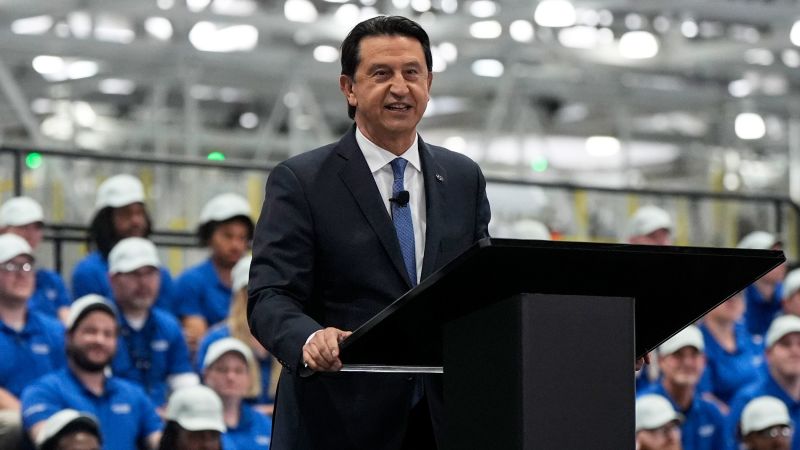
In a recent enforcement operation by the U.S. Department of Homeland Security at the Hyundai – LG Battery Plant in Ellabell, Georgia, more than 300 South Korean workers were detained and deported. This unprecedented raid marks the largest single-site enforcement action in U.S. history. Hyundai’s CEO, José Muñoz, expressed his shock upon learning of the incident as he was working in his California office, revealing that he initially found out about the raid through news reports.
Muñoz noted that the plant operates in partnership with South Korea’s LG Energy Solution, which likely contributed to the delay in communication regarding the raid. In discussions following the incident, he indicated that both the U.S. and South Korean governments are actively collaborating to prevent occurrences like this in the future. Muñoz has remained in contact with officials from the Trump administration since the raid on September 4.
On the same day as the media roundtable, Muñoz addressed the company’s first U.S. investor conference in New York, expressing his compassion for the affected workers and their families. His remarks underscored the emotional and logistical challenges posed by the raid, stating that the stress it caused was deeply understood.
Hyundai’s substantial investment in the United States, particularly at the Ellabell site, highlights its significance as part of Georgia’s largest economic development project. Despite the setback caused by the raid, Muñoz reaffirmed the company’s commitment to advancing its plans, announcing an additional $2.7 billion investment in phase two of the facility, which is expected to create 3,000 new jobs.
The deported workers were specialized laborers essential to the operations of the battery plant. To mitigate the impact of their absence, Hyundai has been reallocating personnel from other facilities to fill the gaps. However, Muñoz emphasized that specific expertise required for the plant operations is scarce within the U.S. labor market.
To address this ongoing labor challenge, he advocated for the establishment of a special visa category for foreign workers with specialized skills. While countries like Canada, Mexico, Singapore, and Chile have similar arrangements with the U.S., South Korea lacks such provisions, complicating the entry of necessary talent.
Muñoz proposed that a targeted visa for specialized workers who need frequent access to the U.S. could alleviate staffing shortages. He noted that once the factory becomes operational, many of these workers would not need to return frequently.
Despite his call for improved visa pathways, Muñoz acknowledged the uncertainty surrounding potential future raids, stating, “Nobody can say they are exempt from everything.” The implications of the raid on labor dynamics, investment plans, and the future of specialized work in the U.S. manufacturing sector continue to unfold.