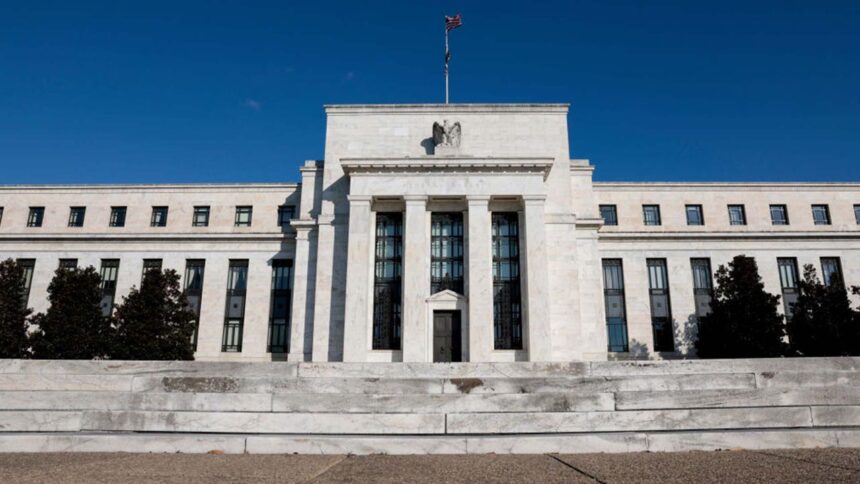
The recent cut to the Federal Reserve’s key interest rate has sparked significant attention as its implications ripple through the U.S. economy, particularly in Texas, which is grappling with various economic challenges. As the eighth-largest economy in the world, Texas faces a paradox; despite its substantial size, it has recently been identified as having the most financial distress in the nation, according to a WalletHub analysis.
The economic backdrop reveals a troubling trend. Employment growth in Texas has slowed considerably, as noted in a report from the Federal Reserve Bank of Dallas, and construction activity has declined as well, hindered by tariffs and a shortage of skilled labor. The WalletHub study highlighted several concerning financial indicators. Notably, Texas residents ranked ninth-lowest in credit scores nationwide in the first quarter of this year. Furthermore, there has been a troubling increase in the number of residents with accounts in forbearance or deferred payments, placing Texas third-highest in this category. The statistics are stark: 7.1% of residents hold distressed accounts. Additionally, non-business bankruptcy filings surged by 22% over the past year, positioning Texas sixth in the nation.
Economists and analysts are closely monitoring these trends. Chip Lupo, a WalletHub analyst, commented on the significance of these financial metrics, stating, “Measuring the share of residents in financial distress is a good way to take the pulse of a state and see whether people are generally thriving or having trouble making ends meet.” He emphasized that combining data on delayed payments, bankruptcy filings, and shifts in credit scores provides a comprehensive view of Texas’s economic landscape.
In response to the Fed’s interest rate cut, immediate effects on borrowing costs are expected, particularly for revolving debt and short-term loans. Texans may begin to notice changes in their borrowing conditions within weeks, although broader economic repercussions could take longer to materialize. Lower borrowing costs could be advantageous during this period of financial uncertainty. Ben Hart, CFO of Texans Credit Union, noted that “the cost to borrow will likely become cheaper,” a factor that could alleviate some financial pressure on household budgets and could lead to an uptick in loan demand. Consumers have been cautious and have postponed significant purchases, particularly in the auto and real estate sectors, while waiting for a favorable lending environment.
The mortgage market presents a mixed picture. While interest rate cuts by the Fed may enhance affordability for first-time homebuyers, historical trends indicate that lower rates often correlate with rising home prices, creating challenges for new buyers. Despite this, a report from Redfin recently indicated a drop in mortgage rates from 6.9% to 6.35%, with market forecasts suggesting stabilization ahead of further Fed actions and anticipated job reports.
Looking ahead, the Federal Reserve has indicated the likelihood of additional rate cuts in the near future, which could further shape Texas’s economic landscape as households strive to navigate their financial futures amid rising uncertainty. Information from reputable sources including WalletHub, Redfin, and Texans Credit Union has been instrumental in understanding these evolving economic dynamics.