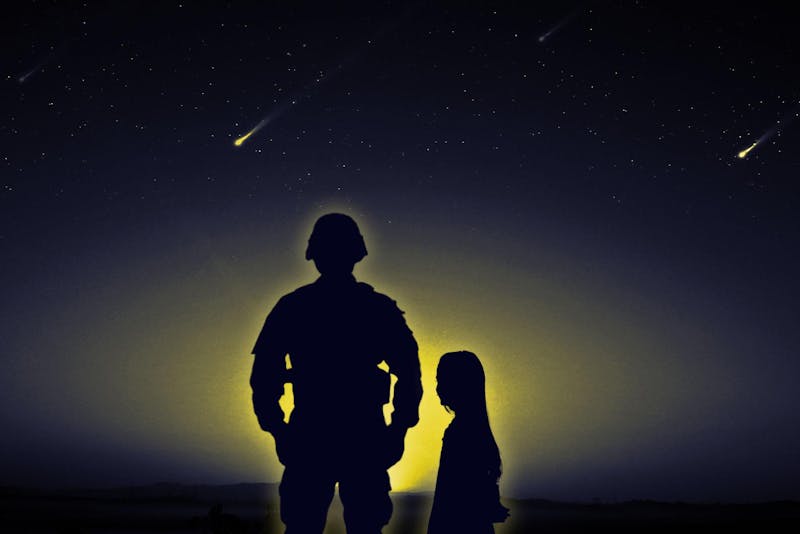
When individuals hear the term “gold star child,” many envision the cheerful gold star stickers handed out for academic achievements during elementary school. Some might even associate it with high achievers or beloved family members. However, the reality behind this label is profoundly different and carries heavy emotional weight. A gold star child refers to a son or daughter of a U.S. service member who was killed in action. It’s a designation that encapsulates loss, resilience, and a unique perspective on life.
The personal narrative of one gold star child reverberates with the pain of an unimaginable loss. On April 1, 2007, her father, serving in the U.S. Army, was killed in Afghanistan. At just three months old, she was left without the chance to know him, save for a video he made prior to his final deployment. This absence created a void that defined her childhood experiences—father-daughter dances and sports events filled with parental support were moments she could only dream of.
In lieu of personal memories, she grew up surrounded by folded flags, shadow boxes, and family anecdotes. The remnants of her father’s life—photos, medals, and heartfelt stories—shaped her understanding of who he was. For her, April 12 is not merely a date on the calendar; it marks the moment her life pivoted irrevocably, a day laden with the weight of loss and remembrance. She often felt the stark differentiation from her peers, as the absence of her father cast a long shadow over her formative experiences.
Despite the sorrow intertwined with her identity as a gold star child, she emphasizes the understanding rather than pity. This label has influence over her worldview, informing her attitudes toward service, sacrifice, and gratitude. She realizes that genuine bravery doesn’t always wear a uniform, and that heroes don’t always return home. The knowledge that her father—like countless others—was a human being with aspirations, flaws, and a family who longed for his return remains a poignant element of her life story.
The narrative brings to light a crucial point often overlooked: the human aspect of military service. Each service member represents more than just a symbol of strength or patriotism; they embody personal aspirations, familial bonds, and dreams of a future. The profound absence left by a fallen service member manifests itself in empty chairs, unmade memories, and emotional scarring that families must learn to navigate daily.
In a world frequently absorbed in its own affairs—attending classes, navigating social media, or planning future endeavors—it becomes easy to overlook the sacrifices made by those in service. The contributions of these individuals deserve recognition beyond a simple “thank you.” They warrant continual remembrance, respect, and acknowledgment.
Through her experiences, this gold star child has learned that the military comprises real people who made the ultimate sacrifice for the sake of strangers. Their legacies persist not only in rituals, ceremonies, or memorial days, but also in the lives of those left behind. She holds close her pride for her father’s sacrifice and strength, fervently hoping that society never forgets these essential truths. Her journey serves as a reminder that the enduring impacts of loss and courage lie within the daily lives of those who navigate their existence with a piece of their heart forever missing.