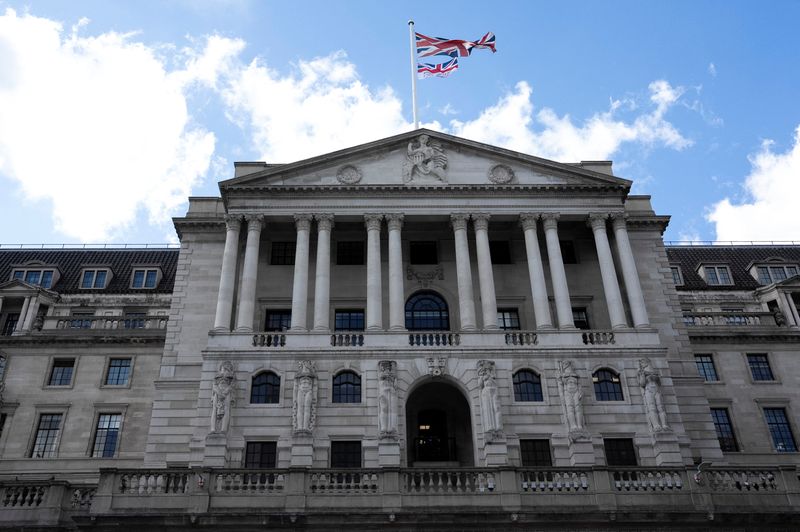
Major financial institutions, including Goldman Sachs, Citigroup, and J.P. Morgan, have adjusted their forecasts regarding interest rate cuts by the Bank of England (BoE) following the central bank’s decision to maintain its key rate. This decision, anticipated by many analysts, came after the BoE implemented a quarter-point reduction in August as it grapples with persistent inflation and an uncertain outlook for growth and employment.
Recent data indicated that British inflation held steady at 3.8% in August, marking it as the highest among major advanced economies. Given this backdrop, Goldman Sachs and J.P. Morgan now anticipate that the next cycle of interest rate easing won’t commence until February 2026, with potential quarterly reductions thereafter. However, both brokerages have recognized that should economic indicators worsen significantly in the near term, a rate cut in December could be plausible.
Peel Hunt also aligns with this outlook, projecting that there will be no further interest rate cuts extending into 2025. Market participants have priced in a mere 7.5 basis points of easing by the year’s end, reflecting about a 30% chance that the Bank of England might lower rates again before the year concludes.
The BoE has kept its inflation forecast intact, projecting a peak of 4% for this month and a gradual return to its 2% target by mid-2027. Governor Andrew Bailey cautioned that the economy still faces challenges, emphasizing that any future rate cuts would be approached with caution and implemented gradually.
Analysts at Citigroup noted that the Monetary Policy Committee’s reactive stance allows for considerable room to adapt to short-term changes in economic conditions. On the other hand, British brokerage Barclays continues to bet on a potential rate cut in November, anticipating that upcoming economic data may trend softer, thus supporting the need for monetary easing in line with the BoE’s data-dependent framework.
In contrast, BNP Paribas predicts that the next rate cut is more likely to happen in December, suggesting that delaying any action would provide the central bank with a safeguard against prevailing economic uncertainties.