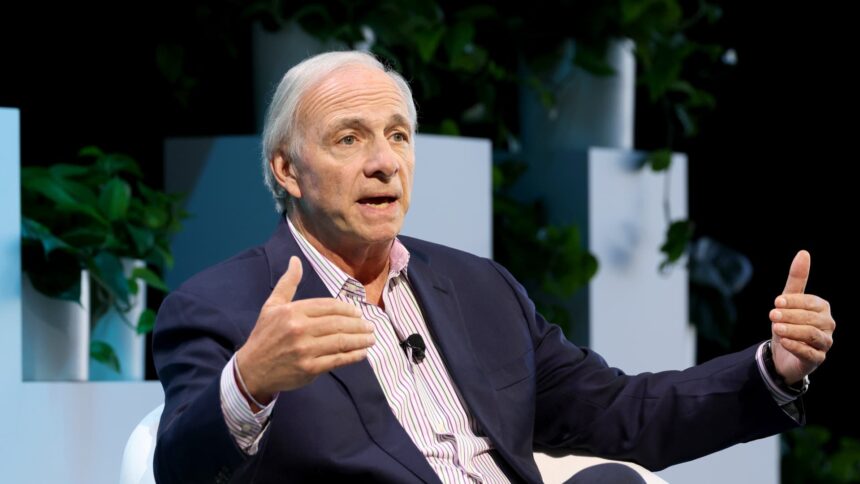
At the FutureChina Global Forum 2025, Ray Dalio, the founder and Chief Investment Officer of Bridgewater Associates, delivered a stark warning about the future stability of major currencies in the face of escalating global debt pressures. He indicated that gold and non-fiat currencies are poised to emerge as stronger stores of value as traditional currencies face increasing risks of devaluation.
Dalio described the current fiscal strategy of the U.S. government as “unsustainable,” drawing attention to the excessive spending and rising debt levels which he believes could precipitate a major fiscal crisis. He emphasized that this situation threatens the integrity of the existing monetary order. According to Dalio, the reluctance of global governments to curtail their spending and borrowing practices places all currencies at risk of losing their attractiveness as repositories of wealth. In light of these factors, he advised investors to allocate around 10% of their portfolios to gold.
Joining Dalio on the panel, Ng Kok Song, founding partner and chairman of Avanda Investment Management, echoed his sentiments, declaring that the unsustainable nature of U.S. debt has reached a critical juncture, although the exact timeline for when a crisis might hit remains uncertain. He pointed out that these fiscal risks are not limited to the U.S. but are similarly evident in countries such as France, Japan, and China.
Dalio noted that this year, the U.S. dollar has depreciated by over 10% against other major currencies, yet those currencies have also weakened when measured against gold. He remarked that gold is now the second-largest reserve currency globally, further underscoring its growing importance in the financial landscape.
The backdrop to these declarations involved an alarming imbalance of supply and demand. Dalio characterized the U.S. government’s debt as having skyrocketed to six times the amount of revenue it takes in, with estimates suggesting that an additional $12 trillion in debt may be necessary to address a $2 trillion deficit, $1 trillion in interest payments, and the roll-over of $9 trillion in maturing debt obligations.
He pointed out that the global market does not possess the demand needed to absorb such a massive influx of debt, leading to significant supply-demand imbalances. Despite proposing to lawmakers in Washington a plan to reduce the fiscal deficit to 3% of GDP, Dalio lamented that bipartisan reluctance has stalled efforts to achieve a sustainable debt level. He explicitly mentioned the anticipated impact of U.S. President Donald Trump’s expansive tax-and-spending initiatives, which are projected to add $3.4 trillion to the national debt over the next decade.
While Dalio acknowledged that the U.S. dollar would continue to be utilized as a dominant medium of exchange, he did caution that the growing influence of the Chinese currency in global trade could diminish the dollar’s prominence on the world stage. The implications of these economic trends suggest significant challenges ahead as investors and governments grapple with the shifting landscape of currency valuation and fiscal responsibility.