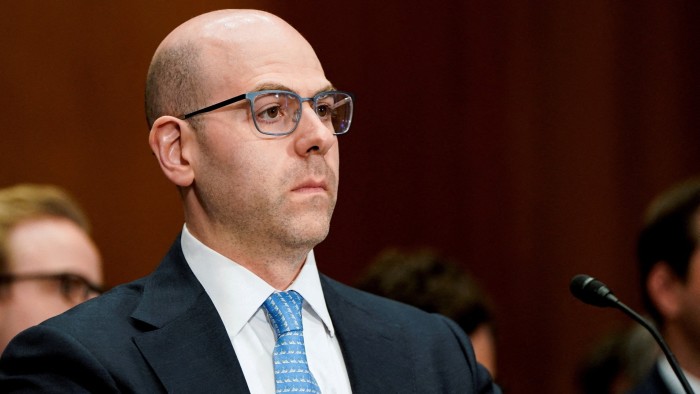
In a significant move, the Federal Open Market Committee (FOMC) has initiated its first interest rate cut of 2025, reducing the benchmark federal funds target range by a quarter percentage point to between 4 percent and 4.25 percent. This decision, reached with an 11 to 1 vote, comes after notable pressure from President Donald Trump, who has been vocally advocating for the Federal Reserve to lower interest rates aggressively to stimulate economic growth and alleviate the government’s borrowing expenses.
Stephen Miran, the newest member of the Federal Reserve Board who cast the sole dissenting vote at the recent meeting, argued in favor of a more substantial half-point cut. Miran highlighted his belief that the current inflation levels were not significantly impacted by tariffs and indicated that the administration’s immigration policies could lead to diminishing price pressures. Despite being an ally of President Trump and having joined the central bank mere hours before the meeting, Miran clarified that he conducted an independent analysis without consulting the president pre- or post-vote. “I was very welcoming,” he commented regarding the reception from his fellow committee members.
Miran’s perspective appears to be in stark contrast to his colleagues, as he acknowledged being “clearly in the minority” in advocating for significant rate reductions. He anticipates that, this year, the Federal Reserve will need to implement total interest rate cuts amounting to 125 basis points, demonstrating a much more aggressive stance than the consensus within the committee.
The economic context surrounding this decision involved the Fed holding rates steady throughout 2024 after earlier cuts, mainly driven by concerns stemming from Trump’s ongoing trade war, which many feared would elevate inflation rates. Although personal consumption expenditures have consistently surpassed the Fed’s 2 percent target since early 2021, an unexpected weakening in the U.S. job market prompted the committee to take action.
While inflation saw a slight increase, with the consumer price index rising from 2.7 percent in July to 2.9 percent in August just prior to the vote, Miran attributed these pressures to recent population changes rather than tariff impacts. He expressed that the influx of millions of new immigrants has contributed to rising housing costs, suggesting that the administration’s focus on reducing immigration could play a significant role in controlling future inflation.
As the central bank navigates these complex economic waters, the recent rate cut has sparked conversations about the independence of the Federal Reserve in the face of external pressures, particularly from the White House. With economists and market watchers observing the unfolding dynamics, the implications of this decision are anticipated to resonate throughout Washington, the business sector, and beyond.