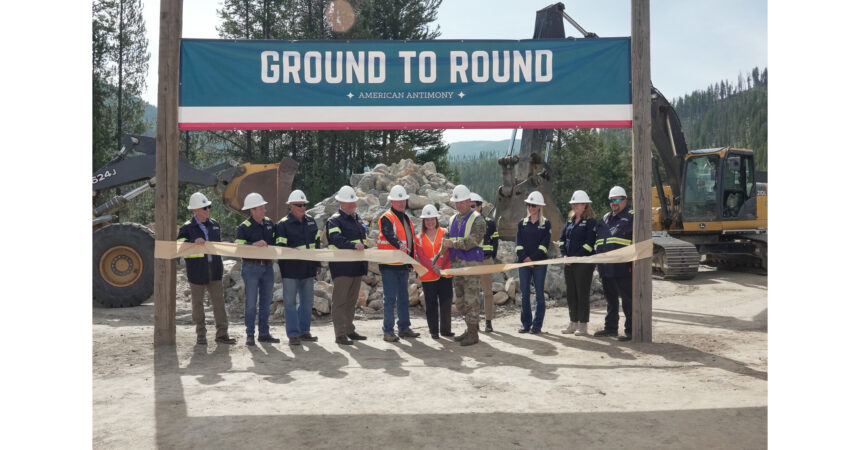
In a significant step towards revitalizing the Stibnite Mining District, Perpetua Resources Corp. has gathered notable leaders from across the nation to celebrate the advancement of the Stibnite Gold Project. This celebratory event comes on the heels of a conditional Notice to Proceed from the U.S. Forest Service, indicating that project development can begin as soon as financial assurances are posted.
Among the attendees were Idaho Governor Brad Little, U.S. Department of Agriculture Deputy Undersecretary Kristin Sleeper, and U.S. Army Major General John Reim. Their addresses underscored the project’s critical importance to national security and defense.
Perpetua President & CEO Jon Cherry highlighted the project’s role in securing American supplies of antimony, a mineral crucial for military applications. “American readiness starts here,” he asserted, referencing the project’s ability to provide urgently needed resources while simultaneously addressing environmental restoration at the historically impacted site.
The Stibnite Gold Project, which has received extensive scrutiny over the past eight years, is positioned to be the first in the U.S. to produce antimony at scale. Current projections indicate it could meet about 35% of U.S. antimony demand in its initial years, a notable shift from reliance on foreign sources, especially given the recent restrictions on exports from China, which dominates the global antimony market.
With an investment of $80 million from the Department of Defense, the project promises not only to create jobs—estimated at over 950 during construction and more than 550 during ongoing operations—but also to lead to significant environmental benefits. Planned initiatives include cleaning up legacy contamination, reconnecting fish to their spawning grounds, and improving local habitats.
The historical significance of the Stibnite Mining District is also noteworthy. This area previously served as a vital source of antimony during World War II, and its redevelopment aims to reclaim that legacy. Past operators left behind significant environmental issues that Perpetua is committed to addressing, having already invested over $20 million in improving local water quality and cleaning up more than 375,000 tons of waste.
Governor Little expressed strong support for the project, emphasizing its potential to contribute to Idaho’s economic landscape by offering valuable job opportunities for local residents. The state’s commitment to a streamlined regulatory process further aligns with the project’s goals of enhancing economic vitality and community quality of life.
In addition to the job and economic contributions, Cherry also highlighted Perpetua’s commitment to the local community via the Stibnite Foundation, which received a $350,000 check during the ceremony. The foundation aims to empower local residents and ensure that the project’s benefits extend beyond mining.
This project not only marks a pivotal moment for Perpetua but also signifies a broader movement toward securing a domestic supply chain for critical minerals essential to national security, thus bolstering U.S. independence from foreign resources. As the Stibnite Gold Project gears up for its official development phase, it is poised to play a vital role in reestablishing American leadership in the critical minerals sector while addressing pressing environmental concerns.