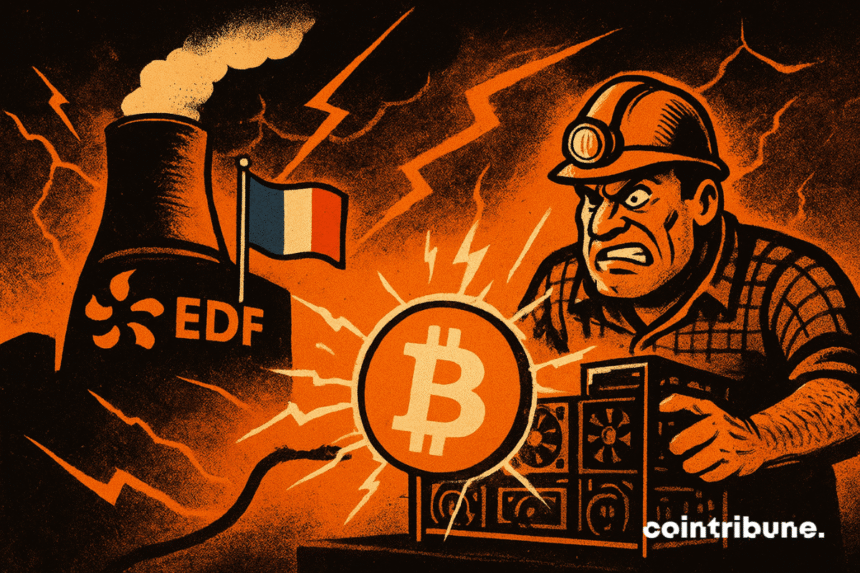
France is currently positioning itself for a significant shift in its nuclear energy strategy, preparing to transfer surplus energy to American interests. This development has sparked considerable debate and concern within the country, particularly among miners who have long awaited clarity and opportunities in this sector.
At the heart of this issue is the Exaion case, involving the EDF subsidiary being acquired by Marathon, the largest American bitcoin mining firm. Critics, including French miner Sébastien Gouspillou, argue that EDF’s actions reflect a betrayal of national interests, as it moves to offload its surplus nuclear energy to the United States. Gouspillou contends that EDF is prioritizing American mining operations over the potential benefits of utilizing this energy domestically.
In recent years, parallels have been drawn between this situation and the controversial sale of Alstom’s energy branch to General Electric. While EDF has since reacquired critical assets such as the Arabelle turbines and secured the maintenance for future nuclear projects, the implications of American oversight in energy exports remain troubling.
Marathon’s acquisition application has raised red flags for the National Bitcoin Institute, which issued an open letter to lawmakers expressing their grave concerns. The letter highlights the potential erosion of France’s energy, digital, and financial sovereignty due to this deal. Moreover, the financial figures at play suggest that EDF will receive only €29 million from Marathon, significantly less than the €170 million originally anticipated. This raises questions about the true financial motivations behind the sale, with suspicions that much of the investment may be funneled toward bitcoin mining rather than the broader promises of technology and innovation.
The National Bitcoin Institute also posits that France is missing an opportunity to capitalize on its nuclear energy surpluses, which could be utilized for bitcoin mining when prices for energy drop. The organization argues that this could allow for greater stability in the energy market while maximizing the value of taxpayer-funded kilowatt-hours.
Critics often highlight the excessive energy consumption associated with bitcoin mining, but a more nuanced analysis suggests that bitcoin may play a crucial role in the nation’s energy transition. By leveraging bitcoin mining, France could potentially stabilize its grid without the need for gas peaking plants or significant alterations to nuclear output. In places like Texas, such collaborations between miners and energy producers have eliminated the need for new gas facilities, showcasing a successful model.
The implications of this deal could go far beyond energy consumption; some observers argue that France could position itself as a leader in the cryptocurrency space, potentially establishing a significant mining industry that currently sees other nations capturing the majority of market share. As the global dynamics shift towards bitcoin, which some are advocating could become a new reserve currency, France runs the risk of falling behind if it does not act on its nuclear surplus.
Concerns are mounting that without decisive action, European nations may miss out on significant economic opportunities while allowing adversaries to dominate the burgeoning bitcoin market. The suggestion is that France could follow the lead of other nations in creating a strategic reserve of bitcoin, thereby transforming its energy surplus into a valuable digital asset.
Ultimately, the decision facing France is not merely about energy management; it encompasses broader questions of national sovereignty, economic opportunity, and the future role of currencies on the global stage. As the landscape rapidly shifts, stakeholders urge a reevaluation of how France’s nuclear capabilities can be employed, both for immediate benefits and for the long-term interests of future generations.