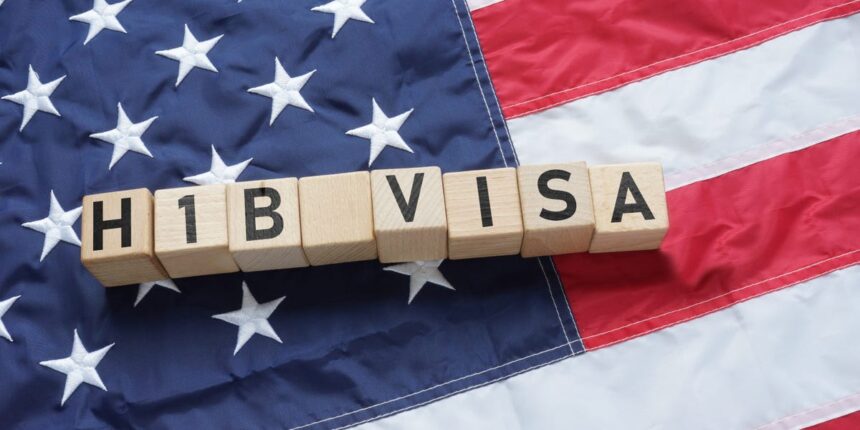
Hiring skilled foreign workers through America’s H-1B program is about to become significantly more expensive. In a recent move, President Donald Trump signed an executive order that imposes a $100,000 application fee for employers seeking to utilize the H-1B visa program. This order will become effective at 12:01 a.m. ET on September 21. According to the White House, this fee will apply to new applicants, while Commerce Secretary Howard Lutnick indicated that it would also affect renewals, although this detail is not specified in the executive order itself.
The administration claims this measure is necessary to curb abuse of the H-1B visa program. As a precaution, major employers such as Amazon, Microsoft, Google, and others have instructed their H-1B employees to avoid international travel or to return to the U.S. before the impending deadline.
The Department of State has confirmed that it is collaborating with the White House and other agencies to roll out the new measures. The H-1B program, under the Department of Labor, enables employers to employ non-immigrants in specialized occupations, which necessitate highly specialized knowledge and at least a bachelor’s degree or its equivalent.
The H-1B visa is intended to help companies fill roles for which qualified candidates are not readily available in the U.S. workforce. The regulations state that employers can temporarily hire skilled foreign workers in circumstances where they cannot find suitable employees domestically.
Eligibility for an H-1B visa requires that foreign workers possess a U.S. bachelor’s degree or a foreign equivalent in the relevant specialty occupation. Those who hold a valid state license or certification may also qualify if they are prepared to work in their specialty area.
H-1B visas are typically valid for up to three years and can be extended for an additional three years, totaling six years in non-immigrant status, provided there are no complications with pending applications like the Form I-140 or labor certification. Employers are mandated to compensate H-1B visa holders at the same rate or higher than other workers with similar qualifications in the same job, or the prevailing wage for that occupation in the relevant area.
Salary levels for H-1B workers vary widely by job type and industry; approximately 30% earn $100,000 or less, while nearly 10% exceed an annual income of $200,000. The changes introduced by Trump’s executive order are expected to have a profound impact on various sectors, particularly “professional, scientific, and technical services,” which account for nearly half of all H-1B applications. The manufacturing sector also ranks high among H-1B petitioners.
Big Tech companies that heavily rely on H-1B workers might face significant disruptions due to the increased costs associated with the program. Analysis of H-1B sponsorships indicated that Amazon is a leading entity, with thousands of filings, followed closely by companies like Microsoft, Alphabet, Meta, Apple, and IBM. The implications of the new fee structure remain to be seen as employers assess their hiring strategies in light of these changes.