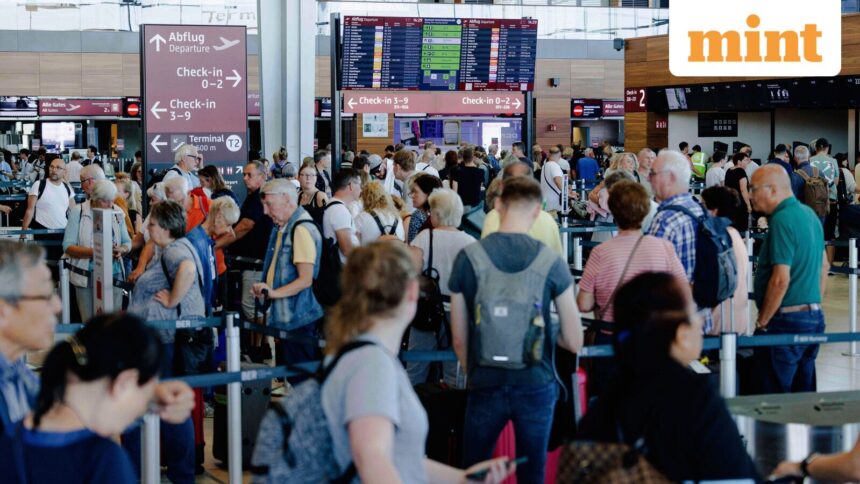
A significant cyberattack on a third-party service provider has led to major disruptions in automated check-in and boarding systems at several prominent European airports. The incident, reported on Saturday, has impacted at least five airports, including Berlin-Brandenburg, Brussels, Dublin, Cork, and Heathrow. Passengers have been faced with cancellations and extended delays, creating chaos at these travel hubs.
The service provider, Collins Aerospace, confirmed that a “cyber-related disruption” affected “select airports” across Europe. Hours after the attack was identified, Dublin Airport announced it was experiencing minor disruptions, further compounding the issue alongside Cork Airport. The parent company of Collins Aerospace, RTX, acknowledged the “cyber-related disruption” affecting their Multi-User System Environment (MUSE) but did not disclose the names of the impacted locations initially.
To mitigate disruption, RTX indicated that the situation could be addressed through manual check-in operations. However, uncertainty looms regarding the perpetrators of the cyberattack, with experts suggesting it could involve hackers, criminal enterprises, or potentially state actors.
Brussels Airport has proactively advised airlines to cancel about half of their scheduled departing flights to alleviate the burden on passengers, stating that this decision aims to prevent extensive queues and late flight cancellations. Many airports experienced significant congestion; long lines formed at Heathrow’s Terminal 4, where passengers were observed arguing in the throngs of delayed travelers.
Reports by aviation data provider Cirium and FlightAware illustrated the severity of the disruptions. By mid-morning, 29 flights had been canceled at Heathrow, Brussels, and Berlin, while over 500 flights experienced delays. At Heathrow alone, more than 650 departures were scheduled for that day. Additionally, the data revealed that incoming flights contributed significantly to the delays, with around 40% at Heathrow and 44% at Brussels.
In response to the turmoil, Delhi Airport issued an advisory concerning potential disruptions for Europe-bound flights due to the cyberattack. Air India released a statement warning passengers of likely delays in the check-in process, urging travelers to utilize web check-in when possible to streamline their airport experience.
Industry experts have expressed concern over the attack’s implications. Paul Charles, an aviation industry leader, remarked on the troubling nature of Collins Aerospace being targeted, considering their extensive expertise and reputation in providing aviation technology.
The European Commission is taking the matter seriously, closely monitoring the unfolding situation, while political officials in the UK have raised questions about possible Russian involvement. The Liberal Democrats have called for an immediate government statement on whether Kremlin operatives could be implicated in the attack, emphasizing the potential need for a robust response should such links be confirmed.
As investigations continue, passengers and airlines remain on high alert, facing uncertainty regarding flight operations and travel plans in the aftermath of this unprecedented cyber incident.