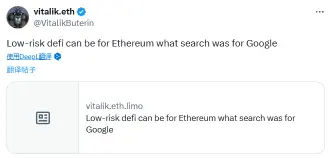
In a recent discussion on social media, Vitalik Buterin, co-founder of Ethereum, highlighted a key tension within the Ethereum community: the conflict between high-revenue applications and ecological sustainability. Buterin articulated that although applications, particularly in the realms of Non-Fungible Tokens (NFTs) and Memecoins, generate significant revenue, they often do not align with the core value objectives of the Ethereum ecosystem. This misalignment raises questions about the long-term viability and purpose of these financial ventures.
Buterin emphasized that while low-risk decentralized finance (DeFi) solutions—such as payment systems, savings protocols, synthetic assets, and over-collateralized lending—can be compared to Google’s search business, these applications provide a more stable source of revenue. They contribute to the economic framework of Ethereum through substantial transaction fees and heightened demand for ETH collateral. Additionally, they embody a commitment to global inclusive finance, sidestepping the ethical quandaries associated with data monopolization prevalent in traditional advertising models.
In light of evolving regulatory environments and enhancements in protocol security, Buterin expressed optimism about the future of low-risk DeFi innovations. He suggested that we might witness the emergence of non-fully collateralized lending, prediction market hedging, and diversified stable value assets—such as commodities baskets and inflation-linked tokens. These advancements could create a synergistic relationship with Ethereum’s experimental applications, paving the way for more robust economic models.
Moreover, it’s crucial for the community to approach blockchain technology with a rational mindset and heightened awareness of risks. As various virtual token issuances and speculative ventures proliferate, ChainCatcher advises caution. It stresses that all content presented is purely market information or opinions from related parties, and should not be interpreted as investment advice. Users are encouraged to report any sensitive information to ensure appropriate handling.