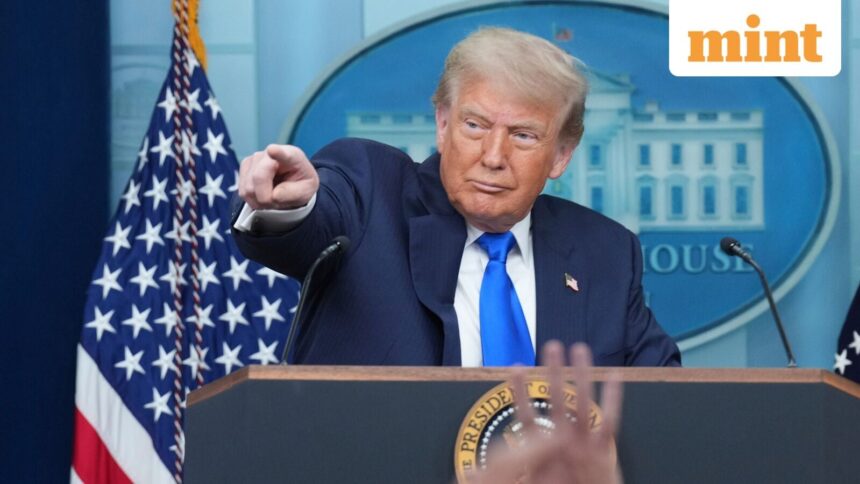
On Friday, President Donald Trump announced a significant increase in H-1B visa fees, raising the cost to $100,000 annually as part of his administration’s ongoing efforts to tighten immigration policies. This new proclamation is poised to have widespread implications for Indian tech companies, which currently sponsor a large number of H-1B visas, with a total of 13,396 issued.
The fee hike will elevate the total costs for these visas from approximately $13.4 million to a staggering $1.34 billion, representing about 10% of the combined net profits of major Indian IT firms, including TCS, Infosys, HCLTech, Cognizant, and LTIMindtree, for the fiscal year 2025. Experts predict that this development will lead to a material impact on share prices for Indian technology firms when trading resumes on Monday. Initial reactions have already been observed, with shares of Cognizant Technology Solutions dropping nearly 4.75% on Nasdaq and Infosys experiencing a decline of 3.40% on NYSE.
The implications of this policy change extend beyond Indian firms. U.S. technology giants such as NVIDIA, Amazon, Tesla, Meta, and Alphabet are also anticipated to feel the effects in the longer term as they rely heavily on international talent, including many H-1B holders from India. Market analysts suggest that the unexpected increase in visa fees will compel tech companies to reassess their hiring strategies, particularly prioritizing experienced roles while reducing junior and mid-level recruitment. As a consequence, there may be a significant reduction in hiring across mid-sized firms and startups, with some positions potentially being relocated offshore to mitigate costs.
Seema Srivastava, a Senior Research Analyst at SMC Global Securities, emphasized that the fee hike significantly undermines the competitiveness of both Indian IT firms and U.S. firms that depend on skilled talent from overseas. “The U.S. government’s decision to impose this annual fee directly impacts firms that heavily rely on H-1B professionals,” she explained, noting that this move will likely result in increased staffing expenses that would impact profitability.
Additionally, Sandeep Pandey, Co-founder of Basav Capital, highlighted that rising employment costs in both Indian and U.S. tech companies would create challenges. As U.S. firms look to fill positions with American workers, they may face the reality of higher salary expectations for local talent, which might not offer the same level of efficiency as their Indian counterparts. This situation is expected to further increase input costs, potentially leading to reduced business volumes and profit margins.
As the markets prepare for trading, significant scrutiny is expected regarding the responses of both Indian and American tech companies. Stocks of NASDAQ-listed firms, including NVIDIA, Tesla, Meta, and Alphabet, are particularly likely to show volatile reactions as investors digest the implications of this substantial policy change on profitability and talent acquisition strategies moving forward.
In light of these developments, experts advise investors to approach the situation with caution and to consult with certified professionals before making investment decisions, as financial market conditions can undergo rapid changes with such regulatory announcements.