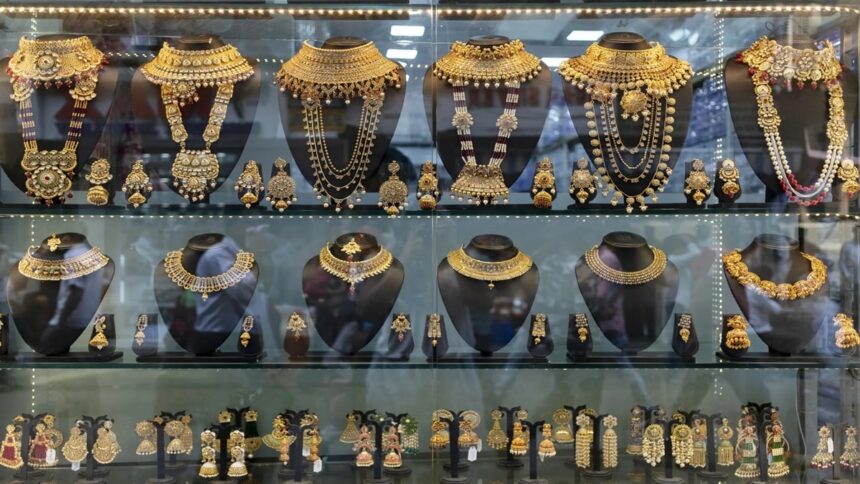
Indians have long harbored a profound enthusiasm for gold, which has recently been underscored by a significant shift in consumer trends. India has overtaken China to become the world’s largest consumer of gold, with families in the country reportedly holding around 24,000 tonnes. This figure surpasses the total gold reserves held by global central banks, illustrating the cultural and financial importance of gold in India.
Traditionally, gold is seen as a symbol of prosperity and is frequently acquired for significant life events, particularly weddings. A notable statistic reveals that weddings, along with auspicious festivals like Dussehra and Diwali, account for roughly one-third of India’s annual gold sales. As the country prepares for these festive months, the price of gold has reached unprecedented levels.
In 2025, gold prices have shown a remarkable increase, rising over 40% so far this year. Currently, the price of 24 karat gold stands at Rs 11,021 per gram, a substantial jump from Rs 7,633 a year ago. The price for 10 grams of 24 karat gold has seen an even sharper increase, soaring by 50% compared to last year, now priced at Rs 1,09,388. Additionally, global gold prices have reached $3,700, more than double what they were in September of the previous year.
With these astronomical prices, questions of consumer sentiment arise as the festive season approaches. Will Indians be deterred by the high costs, or will they maintain their tradition of purchasing gold despite the rising prices?
The current trends indicate that for the first time, gold prices in India have surpassed Rs 1 lakh for ten grams, setting the stage for a unique festive season in 2025. Although price increases in the range of Rs 50,000 to Rs 1 lakh have somewhat tempered demand, the luxury segment remains robust. The CEO of Titan’s Jewellery division has confirmed that even with high prices, demand remains strong in the premium category.
The World Gold Council’s latest report highlights a resurgence in gold demand as the festive season nears, driven primarily by an increase in physical investments in gold bars and coins. This uptick in investment demand suggests that despite high prices, the allure of gold remains compelling.
As India braces for what is likely to be a busy October to December quarter, the nation continues to be a significant player in the global gold market. Recent data shows that gold imports surged to a multi-month high in August, likely in anticipation of increased domestic demand during the festive season. Furthermore, India’s gold reserves have reached a record level of 880 tonnes, now accounting for 12.5% of the country’s foreign exchange reserves, up from 9% a year earlier.
So, what is driving the rise in gold prices? A myriad of international events, including geopolitical tensions stemming from the Russia-Ukraine conflict, have led to an increased demand for gold among central banks, further putting upward pressure on prices. Continued uncertainties regarding the U.S. debt burden and recent tariff decisions have compounded these effects, elevating gold’s status as a safe haven asset.
The Federal Reserve’s recent move to cut interest rates could also influence gold prices, potentially supporting them as investor risk appetites fluctuate. In a falling interest rate landscape, while riskier assets like equities may thrive, gold often maintains its appeal.
Looking forward, the propensity to invest in gold tends to rise with income levels. The recent reduction in the Goods and Services Tax (GST) on a variety of purchases may also provide households with additional cash, creating opportunities for increased gold investment this festive season.
As the year draws to a close, it remains to be seen how much gold Indians will purchase in the final three months of 2025 amid these high prices and evolving market conditions.