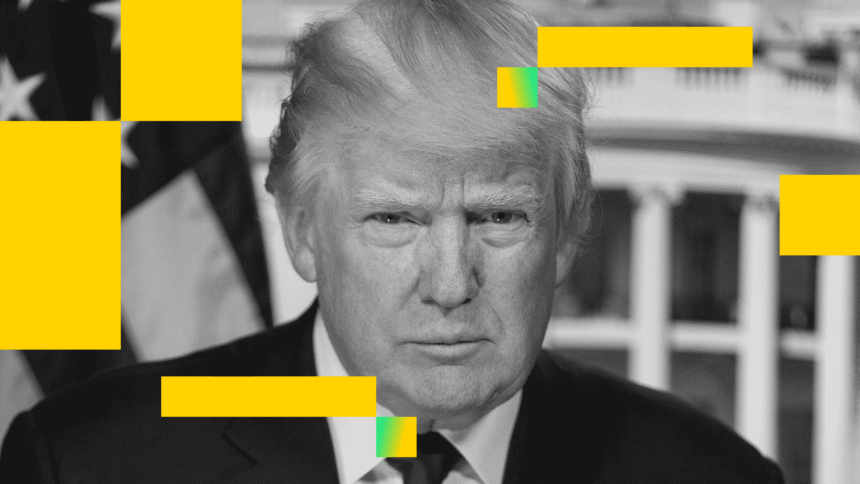
Controversy surrounds President Donald Trump’s second term, chiefly due to his ongoing criticism of Federal Reserve Chair Jerome Powell. Trump has accused the Federal Reserve (Fed) of maintaining high-interest rates, which he claims are detrimental to the American economy. This criticism transcends mere rhetoric, as Trump seeks to undermine the Fed’s board, a historic institution known for its political independence. Ironically, such actions may backfire, potentially driving the U.S. dollar into a deeper sell-off.
Lloyds Bank analysts led by Nicholas Kennedy noted that political pressures could hinder the Fed’s ability to shift to a more accommodating monetary policy. They indicated that this environment could leave the Fed reactive rather than proactive, which is not favorable for the dollar.
Trump’s recent attacks escalated on a Thursday when his administration made an unusual move to petition the U.S. Supreme Court for the removal of Federal Reserve Governor Lisa Cook. If successful, this would mark the first forced dismissal of a sitting Fed governor since the institution’s inception in 1913. This action came on the heels of a temporary judicial block imposed by U.S. District Judge Jia Cobb, who halted Cook’s ousting pending further legal proceedings.
Amid this turmoil, the Lloyds Bank team suggested that such political assaults on the Fed may amplify as Powell approaches the culmination of his term as Chairman. Trump’s recent appointee, Stephen Miran, is advocating for aggressive rate cuts, pushing for a reduction of 50 basis points in the Fed’s most recent meeting.
At the heart of Trump’s campaign is a desire for a Federal Reserve that aligns with his economic perspective, which calls for ultra-low interest rates around 1%. He argues that the current rates are excessively high and prohibitively affect mortgage costs, thereby hindering homeownership and imposing substantial refinancing expenses for millions of Americans. He depicts the situation as a great oversight in an otherwise vibrant economy. Economists have echoed his concerns, suggesting that rates are elevated given signals of weakening labor markets and consumer health. The Fed is thus viewed as being “behind the curve”—a term indicating a sluggishness in adjusting rates to match the shifting economic landscape.
However, Trump’s push for swifter rate cuts may inadvertently push the Fed further behind that curve. The challenge for Powell and the Fed is considerable. They must navigate the demands of managing the world’s largest economy while contending with political pressures that complicate their decision-making process. The Fed faces a classic catch-22 situation: Glance at quick rate cuts amidst political calls for action and risk the appearance of political compromise, or delay and invite accusations of inaction during a potential economic downturn.
This complex dynamic could lead to a hesitant approach from the Fed. In an effort to avoid being perceived as capitulating to political expectations, they may keep rates elevated longer than necessary. Such prolonged inaction risks creating a scenario where more substantial rate cuts are required if economic conditions worsen significantly, sending a troubling signal to markets and potentially escalating volatility.
The implications of this political pressure could significantly affect the dollar, a scenario that is considered bullish for assets like gold and bitcoin. The dollar index has seen a noteworthy decline of nearly 10% this year, dropping to 97.64, while bitcoin has surged by 24%, now priced at $115,600.
As this situation unfolds, the balance between political influence and independent monetary policy remains precarious, with widespread implications for the broader economy and financial markets.