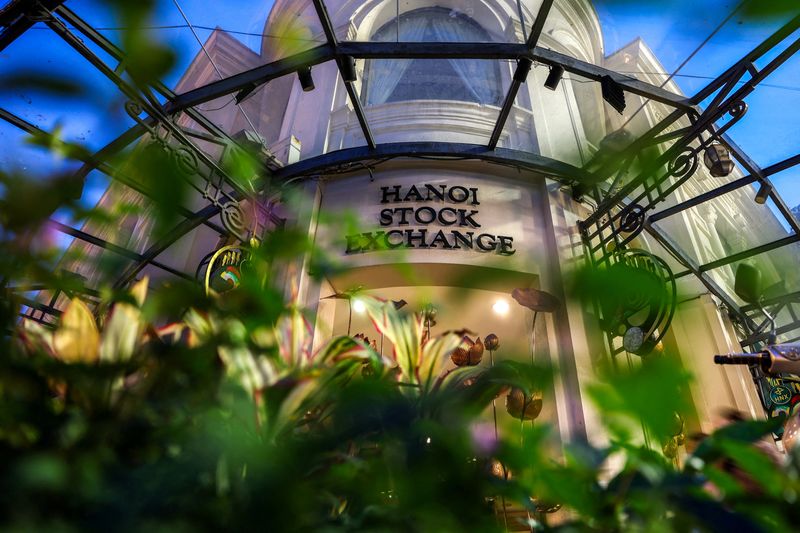
Vietnam’s initial public offering (IPO) market has shown signs of revitalization, driven by a recent share rally, regulatory reforms, and increased credit availability. However, foreign investors have remained cautious, despite the potential for an upgrade to emerging market status by index provider FTSE Russell.
In a notable development last week, Techcom Securities, a subsidiary of private lender Techcombank, successfully raised $410 million through its IPO. This move places the firm’s valuation at approximately $4 billion, marking it as one of the largest IPOs in Vietnam in recent years. To put this into perspective, this single offering is nearly equivalent to half the total value of 36 IPOs conducted in Malaysia—Southeast Asia’s leading IPO market—so far this year, according to LSEG Workspace data.
Private equity fund Dragon Capital anticipates that by 2028, around 13 companies, including Techcom Securities, will enter the IPO landscape in Vietnam. These newfound listings could aggregate to a market capitalization of up to $47.5 billion, which would represent nearly 14% of Vietnam’s current market value. Historically, the IPO activity has seen a slowdown, with only a single IPO executed in 2024 and three in the previous year.
The recent share rally, alongside a regulatory change that streamlines the listing process, has generated renewed enthusiasm among companies looking to go public. According to Nguyen The Minh, head of research and development at Yuanta Securities Vietnam, the Vietnamese stock index has surged by 29% this year, making it the best-performing stock market in Southeast Asia. “If firms had plans to launch IPOs, they don’t want to miss this wave,” he commented.
Notable recent stocks include Vinpearl, the resort division of Vingroup, which raised around $190 million in an IPO after more than a decade of being privately owned. Additional companies, such as the agricultural arm of Hoa Phat Group and the securities division of VPBank, have also announced their intentions to go public. Potential future listings might include VPS, the largest securities firm by market share, as well as Long Chau pharmacy, a subsidiary of technology firm FPT.
This market boom is being supported by increased access to credit, including margin financing, raising concerns that such practices may lead to asset-price inflation. Currently, Vietnam’s credit-to-GDP ratio is over three times the median rate for emerging and middle-income nations. The IPO push among securities firms is largely motivated by the need for more capital to comply with new regulatory standards and facilitate margin lending, noted Hoang Huy, equity strategist at Maybank Securities Vietnam.
Despite the optimistic outlook for IPOs, foreign investor engagement has decreased sharply. In 2024, foreign investment in the Ho Chi Minh City stock exchange dropped by around 90 trillion dong (approximately $3.4 billion), leading to a decline in foreign ownership to about 15.5%. This marks a reduction from 17% in 2024 and nearly 19% at the conclusion of 2023. Analysts like Huy suggest that while foreign sellers are reacting to exchange rate uncertainties and are seeking to cash in on profits, this trend does not imply a total withdrawal from the Vietnamese market.
The anticipated upgrade of Vietnam’s stock market to emerging market status by FTSE Russell could catalyze fresh foreign investment, potentially resulting in estimated net inflows of around $5 billion from both passive and active investors. The decision from FTSE Russell, expected next month, may usher in renewed interest from international markets, reigniting engagement with Vietnam’s burgeoning IPO landscape.