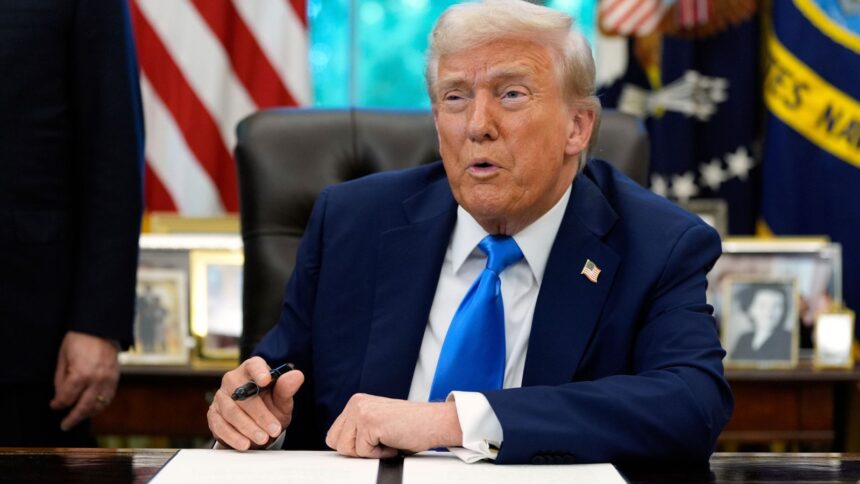
In a significant move impacting international trade, U.S. President Donald Trump announced the imposition of new tariffs, effective from October 1, targeting various products, including pharmaceuticals, kitchen cabinetry, furniture, and heavy trucks. The announcement was made via a post on TruthSocial, where Trump detailed the specifics of the tariffs, which include a 100 percent tariff on branded or patented pharmaceutical products, a 50 percent tariff on kitchen cabinets and bathroom vanities, a 30 percent tariff on upholstered furniture, and a 25 percent tariff on heavy trucks. The rationale for these tariffs is rooted in national security concerns, as outlined under Section 232 of the Trade Expansion Act of 1962, which grants the U.S. government broad powers to impose tariffs based on such claims.
This wave of tariffs comes amid ongoing investigations launched under the same section, with Trump emphasizing the need to protect the U.S. manufacturing process from what he described as the unfair “flooding” of imported products. The President specified that the pharmaceutical tariffs would not apply to companies actively building their manufacturing plants in the U.S., a stipulation aimed at encouraging domestic production.
The ramifications of this decision are particularly pertinent for India, which could face job losses in labor-intensive sectors such as textiles and footwear due to the impending 50 percent tariff. However, experts note that India’s pharmaceutical sector may experience a limited immediate impact; the country is a leading producer of generic drugs, providing nearly 20 percent of global demand. Nonetheless, Indian pharmaceutical companies have been striving to enhance their focus on patented and novel drugs, aligning with the shifting dynamics of the industry.
Additionally, the tariffs could complicate government initiatives in India, such as the Production-Linked Incentive (PLI) scheme, which aims to bolster manufacturing in high-value segments of the pharmaceutical market, including biopharmaceuticals and complex generics. Launched in 2021 with a substantial financial outlay, the PLI scheme aims to produce a range of targeted pharmaceutical products by 2028, potentially affected by the new U.S. tariffs.
The U.S. government has increasingly employed Section 232 to impose tariffs, having previously targeted steel and aluminum. Recent investigations also include commodities and technologies such as semiconductors and processed critical minerals. While these tariffs may not be as comprehensive as those implemented under the International Emergency Economic Powers Act (IEEPA), they offer stronger legal protections against challenges due to their national security justification. This element has historically made it challenging for countries, including India, to contest such measures at the World Trade Organization (WTO).
As the landscape of global trade continues to evolve, the expansion of tariff measures under Section 232 raises concerns within India regarding its own trade policies and the broader implications for international commerce.