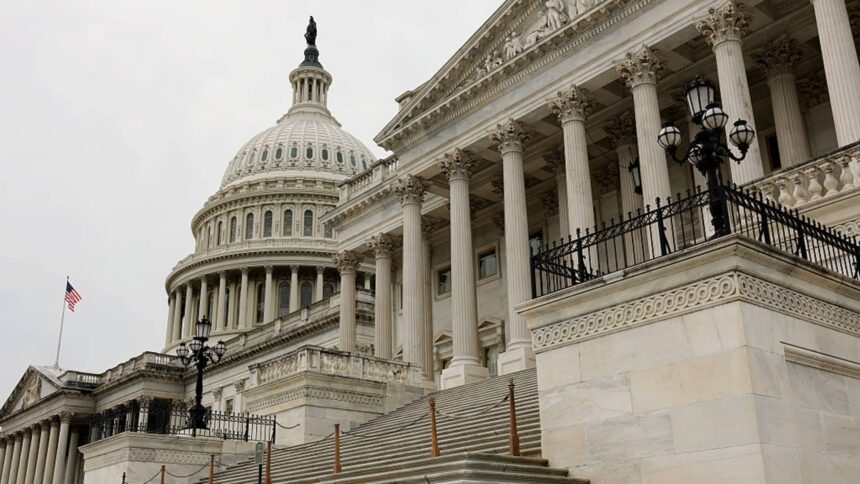
As the political climate intensifies in Washington, the looming possibility of a government shutdown raises concerns that this time could be markedly different from previous instances. Though past government shutdowns have generally resulted in minimal economic fallout, the unique circumstances surrounding the current situation, particularly with President Donald Trump’s threats, have economists and analysts on high alert.
President Trump’s remarks suggest a potentially permanent furlough of certain federal government employees as the showdown between the White House and Congress escalates. This differs significantly from the typical scenario where employees, designated as non-essential, are merely furloughed temporarily until the impasse is resolved. If Trump were to enforce his proposed cuts, it could destabilize a labor market already showing signs of distress, particularly in regions like Washington, D.C., where a considerable number of federal employees reside.
Experts are increasingly uncertain about the implications of this potential shutdown. Michael McLean, a senior policy analyst at Barclays, highlighted that this could represent a departure from historical trends, injecting a new level of uncertainty into the economic consequences typically associated with government closures. Historically, a shutdown is estimated to shave off about 0.1 percentage point from gross domestic product (GDP) per week, and markets have tended to rebound quickly from any initial sell-offs.
However, the current labor market presents challenges that could escalate the stakes. Earlier layoffs prompted by initiatives from Elon Musk’s advisory board have already put pressure on employment in the D.C. area, exacerbating concerns about job security. Analysts note that Trump’s statements could have immediate effects that would appear in forthcoming job reports, creating a grim scenario if the standoff persists.
Additionally, the timing of the shutdown poses problems for significant economic data releases. The Labor Department has announced that its Bureau of Labor Statistics (BLS), crucial for reporting on employment and economic indicators, would cease operations during the shutdown. This suspension not only threatens the timeliness of reports, such as the monthly jobs count but also jeopardizes the quality and accuracy of the data. For instance, an anticipated delay in the consumer price index could affect Social Security cost-of-living adjustments, further complicating economic stability for many Americans.
The Federal Reserve also faces challenges: the absence of government statistical data may force the central bank to rely on private-sector data, which could lead to less informed monetary policy decisions. Historical precedent from the 2013 shutdown illustrates these dangers, as delays in key reports disrupted financial markets and economic forecasts.
While some financial analysts, like Mark Cabana from Bank of America, suggest that the overall economic impact of a shutdown would be limited, there’s a consensus that the implications for federal employees and contractors could be serious. Elizabeth Renter, a senior economist at NerdWallet, emphasized that disruption to income for these groups, even briefly, can have far-reaching effects on their financial stability.
In summary, the current political standoff presents a unique set of challenges that could impact the economy more profoundly than earlier government shutdowns. As uncertainty looms, stakeholders on all sides are bracing for potential repercussions that could reshape not only the labor market but also the broader economic landscape.