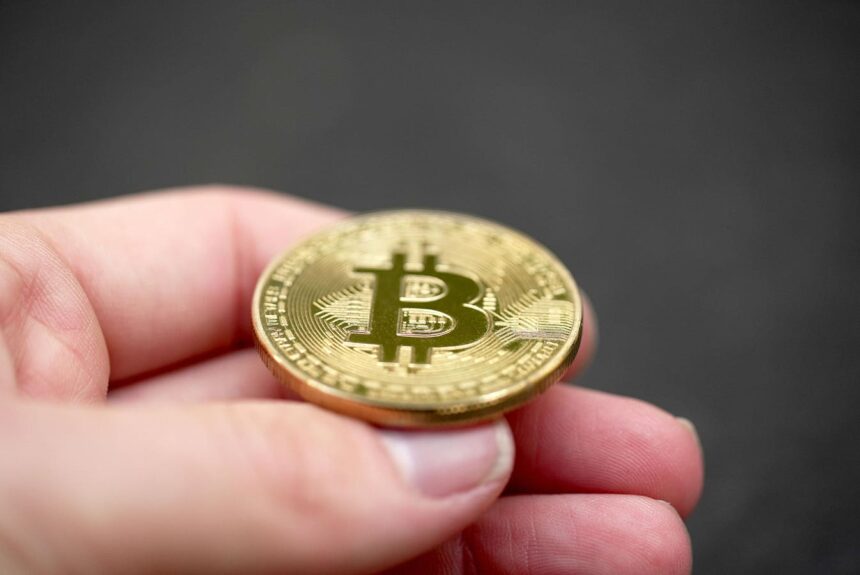
Many investors who first turned to Bitcoin were drawn from the world of gold, motivated by a shared skepticism towards paper currency. Over the past five years, Bitcoin has far outperformed gold, experiencing a remarkable increase of nearly 1,000%, while gold has seen only a modest doubling in value. However, the scenario has shifted in 2025, with gold gaining significant momentum and rising by 45% since January, while Bitcoin’s growth lags at just 20%. This widening disparity has left Bitcoin enthusiasts questioning whether their digital asset has lost some of its appeal.
This year, gold’s climbing value can be attributed to growing concerns among central banks and pension funds, which are gravitating toward the traditional asset as they navigate the turbulent waters of inflation, rising deficits, and global uncertainties. While Bitcoin remains relatively stable, it seems to be losing some luster in direct comparison to gold. This may partly stem from Bitcoin’s trading behavior, which has become more aligned with tech stocks than with the stable appeal of gold.
The connection between Bitcoin and gold extends beyond mere market trends; both assets share characteristics that make them attractive to investors wary of fiat currencies. Their finite supply and independence from central bank policies render them appealing options for those fearing instability in traditional monetary systems. This relationship drew early advocates such as Trace Mayer, a former gold enthusiast who embraced Bitcoin for its unique proposition of digital scarcity. Even Bitcoin’s enigmatic creator, Satoshi Nakamoto, acknowledged gold’s historical significance, linking the inception of Bitcoin to the legislative history of gold ownership in the United States.
Despite this philosophical affinity, market dynamics highlight a stark distinction between the two. Bitcoin, launched in 2009 at a minimal cost, has reached values exceeding $100,000, fueled by an investor mentality that resembles speculation in technology markets. In contrast, gold has maintained a slower, steadier trajectory, experiencing a recent resurgence only after a prolonged period post-2012.
Ed Egilinsky, who leads alternative investments at Direxion, summarized the divergence succinctly, viewing Bitcoin as a high-risk asset. In contrast, gold is perceived as a stabilizing force within investment portfolios. As evidence, Egilinsky noted the substantial gains of the Daily Gold Miners Index, which has surged over 300% this year amid a broader gold market rally.
The correlation data further underscores the disparity: since 2017, Bitcoin has shown a strong relationship with the tech-focused Nasdaq 100, while its connection to gold remains minimal. This indicates that Bitcoin responds more to the trends influencing the tech sector, spiking alongside growth stocks and declining when investor confidence wanes. Meanwhile, gold tends to shine during times of economic uncertainty, making it the preferred choice for increasingly anxious central banks. Recent reports suggest that these institutions are on the brink of surpassing their U.S. Treasury holdings in gold for the first time in decades.
Lawrence Lepard, founder of Equity Management Associates, has described the current economic situation as a potential “crack-up boom,” a term reflecting the rush towards hard assets in response to rampant money printing. He believes that gold currently benefits from a more established reputation among institutional investors, who have yet to fully embrace Bitcoin’s volatility.
Current estimates suggest that Bitcoin ownership has reached around 295 million globally, a notable figure, yet still potentially overshadowed by the prevalence of gold ownership—especially in populous countries like China, where a substantial majority of respondents own gold jewelry.
Despite the current landscape, Lepard remains optimistic, holding both gold and Bitcoin as protective measures against a faltering fiat system. His fund has seen significant growth this year, and he humorously dismisses complaints from some Bitcoin investors about its slower performance.
For investors navigating this complex terrain, the lesson is clear: while both Bitcoin and gold offer alternatives to traditional finance, they serve different purposes. Gold is a seasoned investor’s refuge during market downturns, whereas Bitcoin embodies the high-risk, high-reward narrative of a nascent digital asset class. Although gold is currently leading in 2025, Bitcoin still maintains a longer-term upward trajectory. Historical patterns indicate that Bitcoin tends to perform better in the months of October and November, leading some to speculate that it may once again surpass gold by the year’s end, potentially swaying more traditional investors toward the digital frontier.