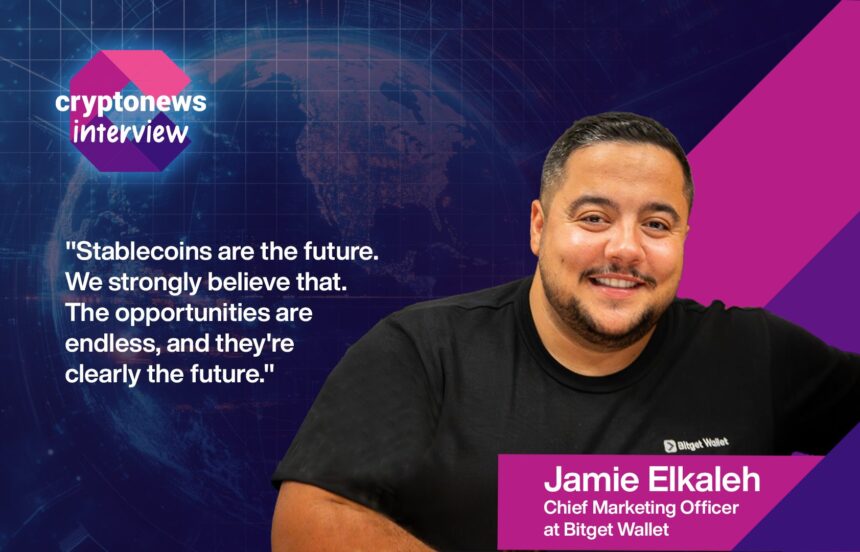
During the recent Token2049 event in Singapore, Jamie Elkaleh, Chief Marketing Officer of Bitget Wallet, shared insights into the growing prevalence of stablecoin QR payments in Southeast Asia. He highlighted how these payments have become increasingly dominant in the region’s crypto transaction volumes.
Elkaleh explained that Bitget has successfully integrated stablecoin payments into various national and blockchain QR systems, such as VietQR in Vietnam and Solana Pay. Collaborations with companies like AEON and Paydify aim to expand merchant acceptance, enhancing accessibility for users. “Whether you’re in Vietnam, the Philippines, Brazil, or anywhere that supports QR payments, you can now scan a QR code and pay directly using stablecoins with your Bitget wallet,” Elkaleh remarked, underscoring the convenience of the payment method.
A notable advantage of the QR payment system is its competitive fee structure. Elkaleh pointed to Brazil’s Pix QR system, a government initiative that traditionally requires payments from bank accounts. He emphasized that using the Bitget wallet significantly reduces transaction costs. “Now, being able to pay directly with your Bitget wallet, you get a more competitive fee,” he explained.
Elkaleh firmly believes that stablecoins represent the future of finance, asserting that Bitget supports all stablecoin transactions for its QR payment feature. He drew parallels with traditional digital payment systems like Apple Pay and Google Pay, stating that stablecoin payments are just a scan away. With over 60 million wallet users, Bitget recently partnered with Mastercard to introduce a crypto-linked card, enabling users to make payments at over 150 million merchants worldwide.
He indicated that physical cards will be available soon, allowing users to settle transactions instantly for everyday purchases like coffee and groceries. Elkaleh recounted a personal experience of purchasing a car in Dubai using stablecoins, illustrating the real-world applications and potential of this payment method.
On the topic of cross-chain transactions, he acknowledged the historical barriers faced when transferring stablecoins across different blockchains. However, he noted that Bitget has made significant strides in simplifying this process, with minimal gas fees for transactions.
Elkaleh hinted at upcoming major announcements regarding Bitget’s payment products in Asia, teasing a partnership with a significant player in the traditional finance sector, although he withheld the company’s name. “You can expect that in the next six to eight weeks. I cannot wait. I am super excited,” he expressed.
Focus on inclusivity was another key point, as Elkaleh remarked that Bitget aims to make crypto accessible to the underbanked population, who often lack options for credit solutions and investment opportunities. He mentioned that users currently have the chance to earn a 10% instant yield on their stablecoins within the application, allowing them to see their investments grow in real-time.
Additionally, discussions with India’s Financial Intelligence Unit (FIU) regarding regulations are underway, with Elkaleh hinting at “exciting announcements” on the horizon. His commitment to serving the underbanked community further underscores Bitget’s mission to provide essential financial services to those previously excluded from traditional banking systems.