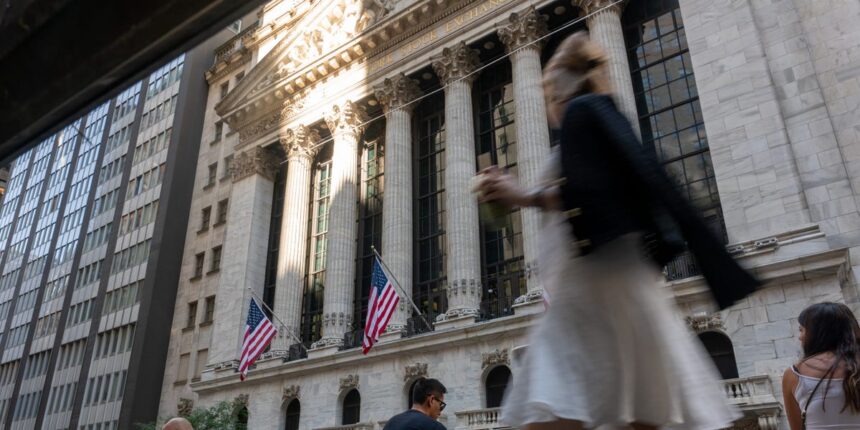
Bearish forecasters have faced a challenging landscape in recent years, particularly as calls for an impending recession or market crash have largely gone unfulfilled. Predictions dating back to 2022 suggested that Federal Reserve interest rate hikes would trigger an economic downturn, yet those forecasts have not materialized. Initially feared increases in the average tariff rate, anticipated to incite consumer discontent and higher prices, have similarly failed to precipitate a recession. In fact, the stock market has been on an upward trajectory, with the S&P 500 appreciating by an impressive 87% since October 2022.
Despite uncertainty regarding the long-term effects of tariffs on consumer prices and corporate profitability, Torsten Sløk, chief economist at Apollo, has urged introspection within the economics community. In a recent post titled “We in the Economics Profession Need to Look Ourselves in the Mirror,” Sløk pointed out the persistent inaccuracies in the consensus forecasts of economic slowdown. According to him, the anticipated recession has not occurred, challenging prevailing economic narratives.
Sløk highlighted the remarkable resilience of the U.S. economy, asserting, “the bottom line is that the US economy remains remarkably resilient.” He contends that the anticipated delayed negative impacts of past economic events have not yet surfaced as predicted. While many indicators, such as the inverted Treasury yield curve and the Sahm Rule, have historically signaled recessionary risks, this has not yet translated into tangible economic decline.
The contrasting views within financial circles have been valuable, particularly from those who diverge from bullish market sentiment. Albert Edwards, a well-known perma-bear, noted that clients who disagree with his outlook still find his insights useful as a “reality check.” However, it has become evident that investors who remained cautious based on doomsday predictions might have missed substantial opportunities for growth.
Nevertheless, recent trends in the labor market may indicate underlying recession risks. Monthly nonfarm payroll data has shown growth patterns consistent with economic slowdowns, and although September’s job figures were unavailable due to the government shutdown, a private report indicated a loss of 32,000 jobs in the previous month. The trajectory of labor market health remains a potential indicator of broader economic challenges.
For now, many investors appear to have set aside fears of a recession, adopting a cautious but more optimistic outlook. Market participants have noted that it is challenging to sustain fears of an impending downturn without accompanying evidence. Jeff Muhlenkamp, a portfolio manager, articulated this shift: “Over time, if you fear something and it doesn’t happen, it’s hard to hold onto that fear.” This evolving sentiment reflects a fundamental change in market psychology, where dissenting voices and bearish predictions have not only faced scrutiny but have also shown the resilience of the market against presumed economic threats.