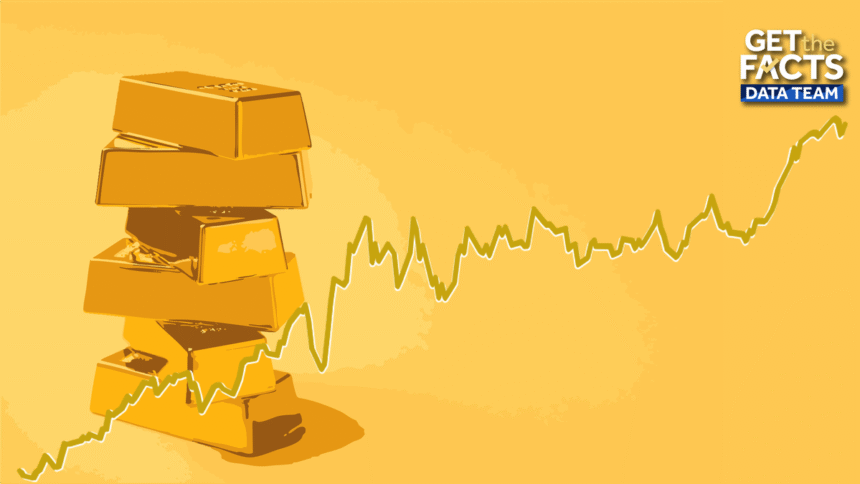
Gold prices are making headlines as they approach the remarkable $4,000 mark, reflecting an astonishing 45% surge since the start of the year, when gold was priced at $2,669 in January. This uptick underscores gold’s reputation as a safe-haven asset, particularly during periods of economic uncertainty, and its price climbed once more in anticipation of a potential U.S. government shutdown, a situation that has historically seen gold values rise.
Historically known as the “currency of kings,” gold has always been prized for its durability, malleability, and resistance to tarnish. In today’s market, it has evolved from a primary trading commodity to a key shield for investors against economic turmoil. Unlike financial products such as stocks and bonds, gold can be physically stored, making it a unique asset class.
Andrea Bubula, a senior lecturer in economic analysis for international affairs at Columbia University, highlighted how the global financial crisis influenced central banks’ attitudes towards gold. He noted the Venezuelan banking crisis of 2009, where the government seized control of private banks, prompting central banks worldwide to diversify their reserves beyond just U.S. dollars. “Gold is good because it is typically negatively correlated with markets, so when markets do badly, gold does well,” he explained.
Recent findings from the World Gold Council emphasize this shift, revealing that central bank gold reserves have skyrocketed over the past three years, doubling to approximately 1,000 tons from an average of 400 to 500 tons in the previous decade.
Taylor Burnette, a research lead at the World Gold Council, identified three primary categories driving gold demand: jewelry and technology, individual investors, and central banks. This year, individual investors have been the most significant contributors to gold’s rising demand, encompassing family offices and affluent individuals seeking portfolio diversification. On average, investors typically allocate about 5% of their portfolios to gold, with allocations ranging from 2% to 10%.
In addition to increasing interest from central banks and private investors, broader economic factors are also influencing gold’s robust performance. With the U.S. dollar weakening—having dropped over 10% this year—and interest rates being lowered, the opportunity cost of holding gold remains favorable. Bubula pointed out the inverse relationship between the U.S. dollar and gold prices. As the dollar weakens, it takes more dollars to purchase gold, leading to increased gold valuations. This relationship holds true not just with the dollar but also across other currencies, indicating gold’s consistent value across global markets.
The World Gold Council’s recent report showed total quarterly gold demand reached 1,249 metric tons—equivalent to over 40 million troy ounces—a 3% increase from the same period last year. This growth is mainly attributed to significant investments in gold ETFs and Asian-listed funds.
Despite the favorable conditions for gold, there are also inherent downsides. The physical nature of gold entails storage and insurance costs, making it vulnerable to theft. Moreover, unlike stocks and bonds, gold does not generate income through interest or dividends, which remains a critical consideration for investors. Bubula cautioned that while gold serves as a financial refuge, it lacks the returning benefits that financial assets such as stocks and bonds typically offer.
As market dynamics continue to shift, gold remains a focal point for investors navigating uncertain economic waters, blending historical value with modern financial strategies.