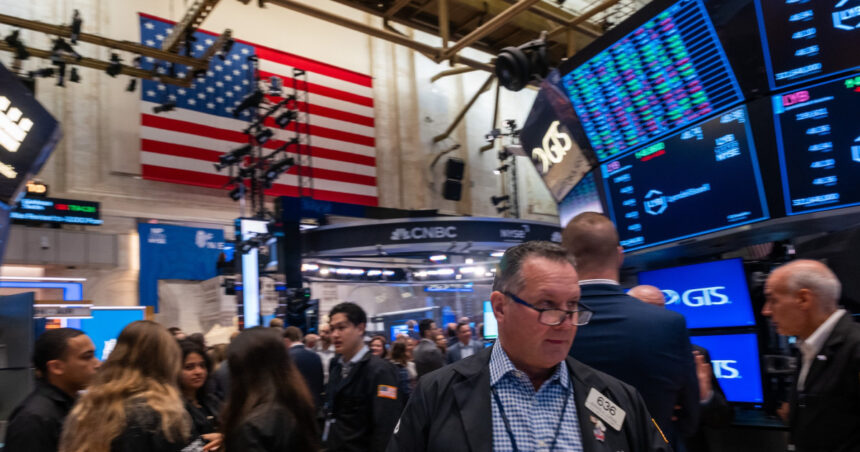
In an unexpected twist, the U.S. stock market has continued its upward trajectory in the face of the government’s ongoing shutdown, with market indices, including the S&P 500 and the Dow Jones Industrial Average, reaching unprecedented highs. This resilience comes despite the shutdown delaying key economic reports that typically influence trading decisions.
Interestingly, the bullish market sentiment isn’t solely driven by the usual tech giants. While stocks like Nvidia remain popular amid the artificial intelligence (AI) boom, a broader array of sectors and companies are experiencing growth, with the Russell 2000 index for smaller companies also achieving a record high—its first since the peaks of nearly four years ago. Gold has also made headlines by reaching its own record price, while one of the most widely held U.S. bond funds is on track for its most successful year in at least five.
Historically, past government shutdowns have had little impact on the overall economy and stock market performance. Many investors are betting that the current shutdown will similarly prove inconsequential. In fact, a significant portion of market analysts anticipates further gains, despite a robust 35% surge since April’s lows.
However, potential risks loom large. A central concern revolves around the high valuations of stocks, particularly following a near-continuous rally. Analysts observe that stock prices have risen at a pace outstripping corporate profit growth. The Shiller P/E ratio, which assesses the last decade of corporate profits, indicates that the S&P 500 is approaching its highest valuation levels since the dot-com boom of 2000. Critics point to concerns that the current situation could echo those past bubbles, particularly with speculative stocks outperforming their more stable counterparts.
While some are optimistic about the market’s prospects heading into 2026, there are cautionary notes about the emergence of “little bubbles” among certain segments of the stock market. Historical patterns suggest that while an expensive market can remain so for extended periods, investors may eventually grow wary of high prices.
Moving forward, the upcoming earnings season will be crucial for determining the sustainability of current valuations. Analysts expect S&P 500 companies to report an average earnings growth of 8% year-over-year. Major corporations, starting with PepsiCo and Delta Air Lines, are set to announce their results soon, and they must not only meet these expectations but also provide forecasts indicating continued growth.
Simultaneously, the Federal Reserve’s stance on interest rates is pivotal. Financial markets have celebrated the prospect of multiple rate cuts, which would ease borrowing costs for households and businesses. This expectation is predicated on slowing job growth, though challenges such as persistent inflation risk complicate matters. Federal Reserve Chair Jerome Powell has warned that the central bank may need to reassess its approach if inflation remains above its 2% target.
Analysts emphasize that if the Fed’s actions don’t align with market expectations, it could trigger significant volatility, particularly in speculative sectors.
The role of AI also looms large; its anticipated benefits for productivity could be critical in balancing economic growth against inflationary pressures. While growth in AI-related stocks has been substantial, their valuation sustainability depends on the industry delivering tangible advancements. Some investors posit that the fate of the market may increasingly hinge on the AI sector’s ability to bolster economic productivity, thereby influencing overall economic health in an era of high government debt.
As market participants closely monitor these dynamics, the interplay of government actions, corporate performance, interest rates, and technological advancements will ultimately shape the economic landscape in the coming months.