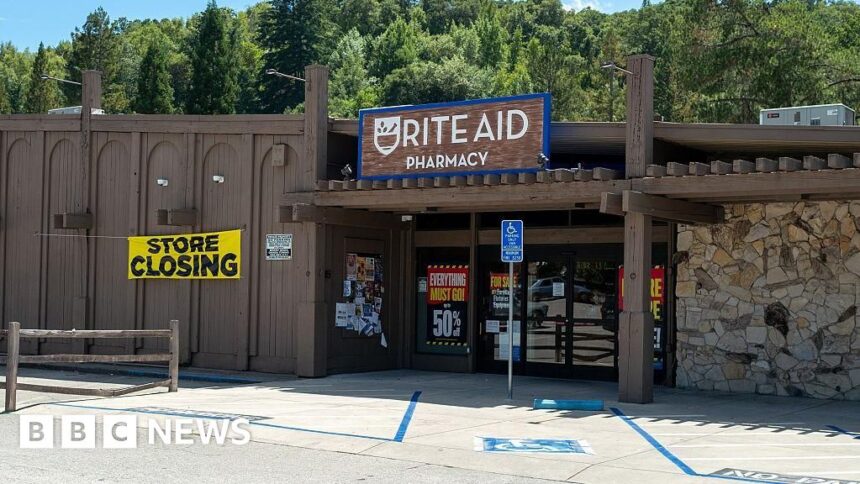
In a significant development within the retail pharmacy sector, Rite Aid has announced the closure of all its remaining stores, marking the end of an era for the once-prominent chain. On Saturday, the company replaced its website with a brief message confirming the closures: “All Rite Aid stores have now closed. We thank our loyal customers for their many years of support.” For former customers, the site provided a link to request their pharmacy records, underscoring the abrupt conclusion of Rite Aid’s operations.
Founded in 1962, Rite Aid grew to become one of the largest pharmacy chains in the United States, boasting around 5,000 stores at its peak. However, in recent years, the company has been beset by financial difficulties, including a bankruptcy filing in October 2023. As of Friday, data indicated that fewer than 100 stores remained operational, highlighting the swift decline of the once-thriving retailer.
Rite Aid faced multiple hurdles that contributed to its downfall, including a serious investigation by the Justice Department regarding its involvement in the opioid crisis. In 2022, the company settled lawsuits alleging that it played a significant role in the opioid epidemic, agreeing to pay up to $30 million. This financial burden was compounded by allegations of unlawful prescriptions for highly addictive substances such as oxycodone and fentanyl, leading to further legal confrontations.
In an effort to stabilize its business amid these challenges, Rite Aid cited the need for restructuring to help “resolve litigation claims” during its 2023 bankruptcy filing. The company also reached a settlement with the Justice Department in July 2024 regarding some of these allegations.
The closure of Rite Aid stores is part of a broader trend sweeping through the pharmacy sector. Other chains have also been shuttering locations for various reasons. CVS, for example, has closed more than 1,000 stores since 2021 as part of a long-term strategic realignment. Meanwhile, Walgreens, which was acquired by private equity firm Sycamore Partners, has closed around 500 stores over the past year.
As more pharmacy locations disappear, experts have raised alarms about the potential for “pharmacy deserts” in the United States. Millions of individuals may soon find themselves without easy access to nearby pharmacies, thereby compounding the difficulties of obtaining necessary prescriptions and healthcare services. The situation poses significant public health concerns, as underserved populations may face additional barriers in accessing medications and healthcare advice.