The construction sector in the eurozone faced a significant downturn in September, with builders reporting a sharper decline in activity. The HCOB eurozone construction purchasing managers’ index (PMI) dropped to 46.0, a decrease from 46.7 in August, indicating an intensifying contraction in the construction market. Contributing to this decline was a notable drop in new orders, which prompted companies to reduce employment levels and curtail raw material purchases. Business confidence among builders has fallen to its lowest level since January, highlighting increasing pessimism regarding the economic outlook for the region.
In the automotive industry, shares in luxury carmaker Aston Martin plummeted after the company issued a profits warning. Citing the challenging global macroeconomic environment, including the ongoing effects of tariffs, Aston Martin announced that both sales and earnings would fall short of expectations. The company’s forecast predicts a mid-high single-digit percentage decline in total wholesale volumes for the financial year, with anticipated profits also likely to be below market expectations. This has led management to initiate a review of future costs and capital expenditure, resulting in shares dropping nearly 11% at the start of trading.
In a positive development for the UK stock market, British bank Shawbrook revealed plans for an initial public offering (IPO) in London. The bank aims to use the proceeds from the IPO to fund growth and enhance its brand recognition. CEO Marcelino Castrillo emphasized the bank’s achievements and strategic goals, highlighting the need to provide flexible and quick services to customers. Shawbrook intends to sell shares to both retail and institutional investors, with a free float of at least 10%, and is projected to be valued at around £2 billion, which would potentially qualify it for the FTSE 250 index.
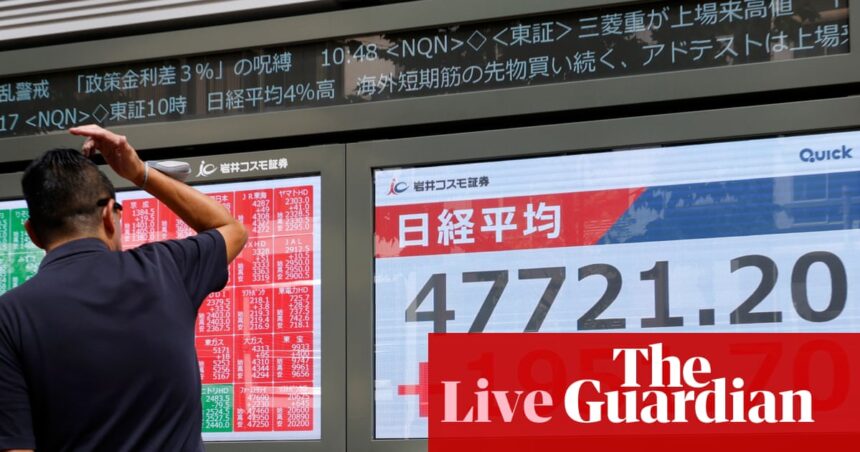
In international currency markets, strategists from Deutsche Bank and Goldman Sachs have abandoned their long positions on the Japanese yen following the election of Sanae Takaichi as the head of Japan’s ruling party. This shift in strategy was prompted by uncertainty around Japan’s policy directions and the timing of expected interest rate hikes. The yen experienced a nearly 2% decline against the US dollar, while the Nikkei 225 index surged to a record high, buoyed by expectations of increased fiscal stimulus under Takaichi’s leadership.
Moreover, gold prices surged to nearly $4,000 per ounce, nearing a historic high, as concerns about unsustainable government debt levels continue to rise. This year has seen gold increase by over 50%, driven in part by fears that politicians might resort to higher borrowing and lower interest rates to stimulate growth, thereby exacerbating inflation. As a result, gold is witnessing its best annual performance since 1979, reflecting broader economic anxieties and market dynamics.
Today’s financial agenda includes the release of the eurozone construction PMI and the UK construction PMI, as well as a keynote speech by Bank of England Governor Andrew Bailey at Scotland’s Global Investment Summit 2025.