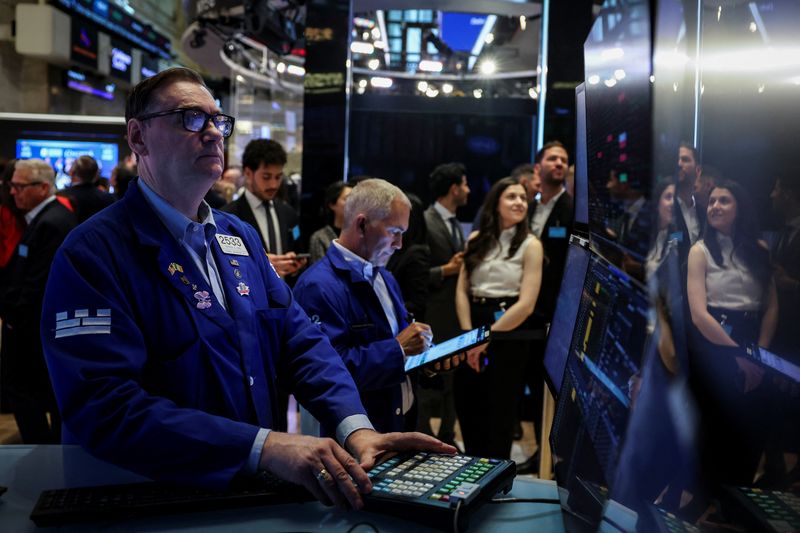
U.S. stock futures demonstrated relative stability as investors navigated the aftermath of a significant market pullback the previous day. Amidst a backdrop of mixed messages on artificial intelligence and the ongoing federal government shutdown, traders were understandably cautious. By early morning trading, S&P 500 futures rose by 8 points (0.1%), Nasdaq 100 futures increased by 38 points (0.2%), and Dow futures gained 60 points (0.1%).
On Tuesday, equities faced a decline from recent highs, with the S&P 500 dropping by 0.4%, the tech-heavy Nasdaq retreating by 0.7%, and the blue-chip Dow falling by 0.2%. Oracle’s shares particularly contributed to this downturn, following a report suggesting that the profitability of its AI cloud business is under more strain than initially anticipated, despite the company’s earlier surge tied to AI optimism.
However, the overall narrative surrounding the AI sector has maintained its potency. Notable companies have announced promising partnerships; for example, a new deal between one leading AI firm and OpenAI further solidified investor enthusiasm, while another firm saw gains following a collaboration with AI player Anthropic. Yet, the ongoing government shutdown has impacted the release of key economic data, leading investors to rely on alternative indicators for insight into the economic landscape. A recent New York Federal Reserve survey indicating weaker future expectations and inflation concerns notably swayed market sentiment.
In a separate development, gold prices soared past the $4,000 per ounce mark for the first time, propelled by increased demand from investors seeking safe haven amid economic instability. The yellow metal has experienced a remarkable rise of over 50% this year, aiming for its best annual performance since 1979. Contributing factors to this gold rally include the government shutdown, a decline in the value of the U.S. dollar and bonds, and a power shift in global political leadership. Analysts have noted a surge in the holdings of gold by exchange-traded funds and significant purchases from central banks, particularly from China, which has maintained a buying streak for eleven consecutive months.
Turning to monetary policy, all eyes are focused on the Federal Reserve’s forthcoming release of minutes from its September policy meeting. Following a quarter-point interest rate cut, Fed officials hinted at potential further reductions in their final meetings of the year, highlighting the balance between sustaining a slowing labor market and controlling inflation. Analysts foresee the minutes reflecting a dovish shift, although disagreements among officials on the extent of rate cuts might become apparent.
On the corporate front, the artificial intelligence startup xAI, backed by Elon Musk, is raising its capital goals to $20 billion, with Nvidia set to contribute approximately $2 billion. This fundraising primarily aims to acquire additional Nvidia chips for use in xAI’s upcoming data center project. Meanwhile, in a strategic move, Swiss engineering firm ABB announced plans to sell its robotics unit to Japan’s SoftBank for about $5.38 billion, diverting from earlier spin-off intentions. The sale is anticipated to facilitate further investments in growth, acquisitions, and shareholder returns, aligning with SoftBank’s ambitions in the field of physical AI.