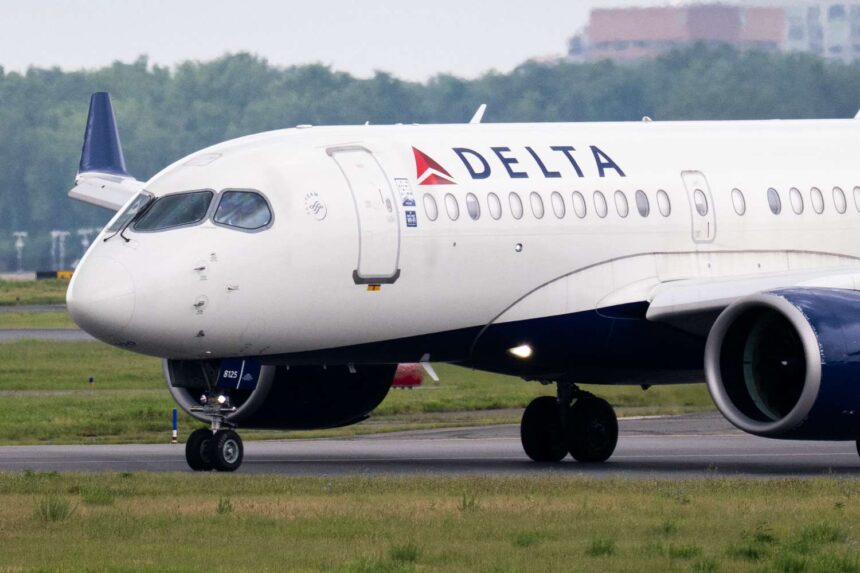
Analysts predict that Delta Air Lines and United Airlines are likely to report favorable third-quarter earnings, driven by strong demand for international travel, corporate bookings, and premium ticket sales. In contrast, budget airlines are facing challenges as consumers opt for fewer domestic flights, particularly in standard seating classes.
Delta is expected to be the first of the major airlines to announce its third-quarter results this Thursday, with industry experts suggesting it may emerge with the strongest performance among its peers. This focus on premium offerings has become increasingly apparent, as both Delta and United Airlines cater primarily to travelers seeking first-class experiences and international routes.
The aviation landscape appears distinctly divided, with “premium” carriers outperforming budget competitors. Deutsche Bank noted in a recent research note that the continuing economic pressures are expected to lead to losses for nearly half of the airline industry. In contrast, budget carriers, struggling with diminished demand, have resorted to promotions in an effort to fill domestic seats, emphasizing the shift of focus from ticket sales to ancillary revenue streams such as credit card partnerships.
According to Moody’s Analytics, the spending habits of affluent consumers have shifted significantly over the decades, resulting in a larger economic impact from this demographic. As a result, airlines and other industries are increasingly targeting higher-end offerings while scaling back services for budget travelers.
Delta anticipates a revenue increase of 2% to 4% compared to the same quarter last year, attributing its growth to strong premium sales and improvements in corporate travel. Recently, President Glen Hauenstein remarked that while their focus remains on high-income customers—those earning over $100,000 annually—there is noticeable unease at the lower end of the market.
Meanwhile, United Airlines is bracing for a decline in revenue per available seat mile (RASM), a critical metric for assessing airline profitability, potentially reflecting negative trends compared to the previous year due to restrictions at Newark Airport earlier this spring. However, CFO Michael Leskinen has expressed optimism that an uplift in international demand and corporate sales could enhance RASM as the year progresses.
Budget carriers like Sun Country Airlines, Alaska Air Group, Allegiant Travel Company, American Airlines, and JetBlue Airways are grappling with decreased interest from cost-conscious travelers. This shift in consumer behavior has contributed to a decline in stock prices for several of these airlines. In response to these challenges, the industry is cutting domestic flight capacities to minimize reliance on discounted fares, which analysts believe are no longer sustainable in today’s market conditions.
Deutsche Bank highlighted the frequent promotions flooding their inboxes, suggesting that while reducing fares might have been effective in the past, current operational costs make such strategies less viable.
The current landscape may also see some relief with Spirit Airlines reducing its capacity by approximately 25% during its bankruptcy proceedings, a move that could inadvertently benefit Frontier Airlines. Frontier has announced plans for route expansion and forecasts RASM to grow moderately year-over-year.
Another budget carrier, Sun Country, has successfully diversified its offerings by moving into charter flights and cargo services for companies like Amazon. The airline expects its revenue this quarter to be stable or increase up to 4% compared to the same period last year.