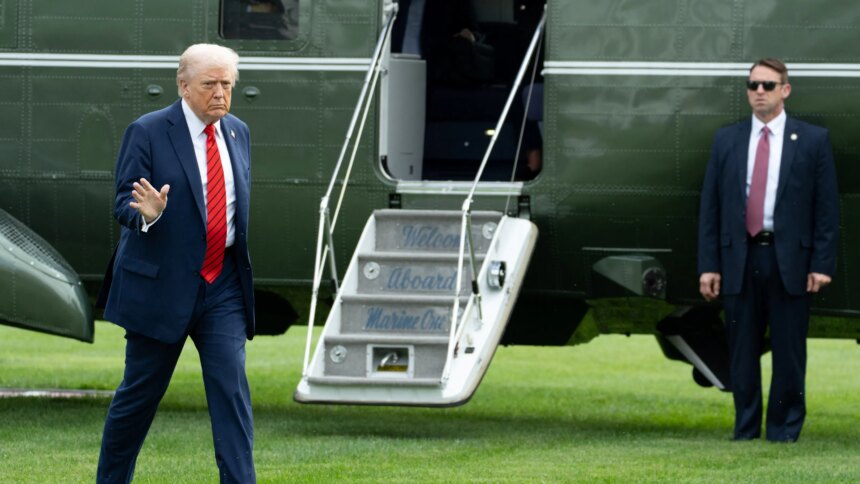
In a significant escalation of economic tensions, President Donald Trump announced that the United States will impose a 100% tariff on all imports from China, set to take effect on November 1. This decision comes in retaliation for China’s recent announcement of new export controls on rare earth minerals, critical resources used in technology and manufacturing. The move reignites a trade conflict between the two economic superpowers after a period of relative calm, during which tariffs had remained unchanged.
Currently, U.S. tariffs on Chinese goods stand at 30%, meaning the new tariff will elevate the total tax on Chinese imports to an astonishing 130%. This escalation follows China’s decision to broaden its export restrictions to include five additional rare earth elements and a number of refining technologies. Furthermore, China has implemented compliance measures for foreign producers utilizing its raw materials.
Trump expressed disbelief regarding China’s actions, labeling them as “a rather sinister and hostile move.” He emphasized that this response was aggressive and unprecedented in the realm of international trade, suggesting that China’s monopoly on rare earths poses a risk not only to the U.S. but to every nation involved in production reliant on these minerals.
In his remarks, Trump hinted at the possibility of rolling back tariffs if China were to withdraw its new export controls. “We’re going to have to see what happens,” he stated, underscoring the uncertain dynamics ahead. Furthermore, he warned that his administration would impose its own export controls on critical software on the same date, intensifying the technological standoff.
Trump’s announcement has had a palpable effect on U.S. markets, sending stock prices tumbling as investors reacted to the renewed threat of a full-blown trade war. Previously, a tariff truce had been established after both nations agreed to maintain existing tariffs during a 90-day extension. That temporary agreement had prevented the imposition of triple-digit duties that would have effectively shut down trade between the countries.
Additionally, Trump suggested that he might reconsider attending an upcoming meeting with Chinese President Xi Jinping at the Asia-Pacific Economic Cooperation summit, citing the trade tensions as a potential reason not to engage. He accused China of harboring ill intentions in their trade relationship, claiming that any positive rapport developed over the past months has now been overshadowed by this hostile escalation.
As the situation develops, the international community watches closely, aware that these tensions could have widespread implications for global trade and the technological landscape.