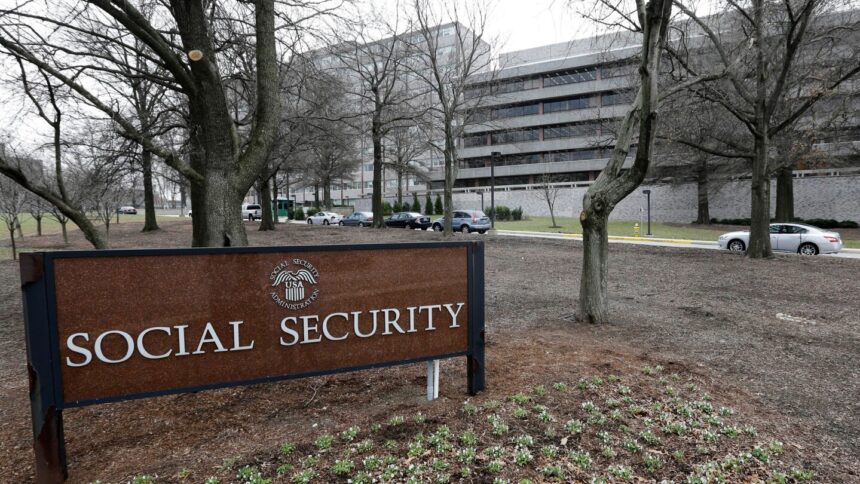
The ongoing government shutdown is causing delays that impact millions of Social Security beneficiaries across the United States. Initially scheduled for announcement on Wednesday, the 2024 Social Security cost-of-living adjustment (COLA) has now been postponed until October 24, contingent on the release of the September Consumer Price Index (CPI), which has also been delayed. This postponement highlights the disruption caused by the shutdown, which has now entered its third week without signs of a resolution, complicating the financial planning for those reliant on these vital benefits.
According to projections from the Senior Citizens League and AARP, beneficiaries can expect a COLA increase of approximately 2.7%. Social Security affects around 70.6 million individuals, including retirees, disabled individuals, and children. However, many beneficiaries are expressing concerns that even this anticipated increase may not sufficiently offset the rising costs of living.
Sue Conard, a 75-year-old retired nurse from La Crosse, Wisconsin, voiced her frustrations during a recent rally at the U.S. Capitol alongside fellow retirees and members of the American Federation of State, County and Municipal Employees union. Conard is advocating for substantial changes to the calculation of the COLA, arguing that the standard CPI fails to account for essential costs specific to older Americans, particularly in healthcare.
“The issue of how the COLA is determined is flat-out wrong because health care is not factored into the CPI,” stated Conard while advocating for reform on the steps of the Longworth House Office Building. In response to concerns like hers, some lawmakers are proposing a switch to using the Consumer Price Index for the Elderly (CPI-E), an index reflecting the spending patterns of older adults on necessities such as healthcare, food, and medicine.
A group of Democratic lawmakers has put forth legislation to adjust the COLA calculation to utilize the CPI-E instead of the standard CPI. In a previous session, Senator Bob Casey (D-Pa.) attempted to introduce similar legislation, but it did not garner a hearing in the Senate Finance Committee.
AARP CEO Myechia Minter-Jordan emphasized that the COLA represents not just a source of income but a crucial component of independence and dignity for millions of older Americans. However, she noted that even with potential adjustments, a significant number of individuals still struggle to cover basic living expenses.
Vanessa Fields, a 70-year-old former social worker and AFSCME member from Philadelphia, highlighted her personal struggle, indicating she spends about $1,000 monthly on groceries—an increase from previous years. “The COLA doesn’t keep up with rising costs, and we’re going to be in bad shape if lawmakers don’t act,” she warned.
Beneficiaries are expected to start receiving notifications regarding their new benefit amounts in early December. A spokesperson from the Social Security Administration, who wished to remain anonymous, confirmed that despite the ongoing government shutdown, adjustments to retirement and Supplemental Security Income benefits will still commence on January 1, 2026.
This delay in the COLA announcement arrives at a time when the Social Security program itself is facing significant financial challenges. The annual Social Security and Medicare trustees report released in June indicated that the program’s trust fund may be depleted by 2034—one year sooner than the previous estimate—a situation that could leave the government only able to pay 81% of scheduled benefits.
Compounding these financial challenges, the agency has already implemented substantial workforce reductions, laying off at least 7,000 employees from a total workforce of 60,000 earlier this year, thereby increasing the workload and strain on remaining personnel as they manage claims and inquiries from a growing number of recipients. The intersection of the government shutdown and the financial condition of the Social Security system leaves many beneficiaries anxious about their futures.