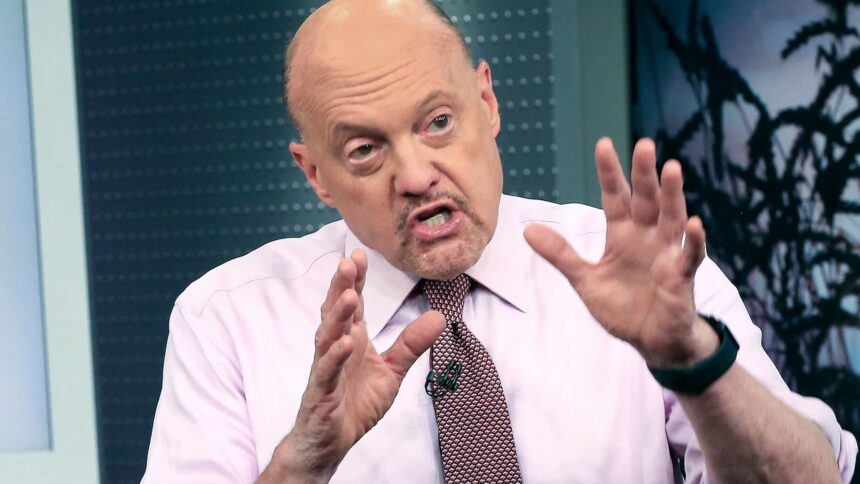
As concerns over sour loans from banks surged, Wall Street experienced a tumultuous day, prompting financial commentator Jim Cramer to suggest that these developments could accelerate the Federal Reserve’s decision to lower interest rates—a scenario many investors are eagerly anticipating. During Thursday’s market session, Cramer remarked, “Today got real ugly, but at least we finally have something that can make the Federal Reserve itchy to cut interest rates sooner rather than later: bank loans gone bad.” He emphasized that credit losses are a clear indicator of economic downturn, a fact that historically incentivizes the Fed to act swiftly.
The financial markets reflected this uncertainty, with major indices closing down. The Dow Jones Industrial Average dropped nearly 0.7%, the S&P 500 fell by 0.6%, and the Nasdaq Composite dipped by 0.5%, primarily driven by declines in bank stocks. Market participants are now increasingly alarmed about the health of regional banks and their lending capabilities, particularly after two automotive-related firms, Tricolor and First Brands, recently filed for bankruptcy.
Adding to the anxiety, Zions Bancorporation reported a substantial $50 million loss linked to two commercial loans, while Western Alliance raised alarms regarding alleged fraudulent activities by a borrower. Cramer interpreted these detrimental loans as early warning signs that the Federal Reserve might consider easing its monetary policy. He stated, “The banking system has now provided us with enough questionable credits in one week’s time that the Fed can quickly slash rates without worrying too much about inflation.”
While lower interest rates generally stimulate overall economic activity, Cramer underlined that they also alleviate the burden on borrowers, potentially reducing default rates. He echoed the sentiments of JPMorgan CEO Jamie Dimon, who had previously likened the recent bankruptcies in the auto sector to cockroaches—indicating that one troubling sign might herald deeper issues.
Yet, Cramer remained optimistic about the broader market’s resilience amid these credit challenges. He pointed out that, regardless of the factors contributing to the problems at First Brands, the reality remains that poor loans primarily affect the banking sector’s profits. “A bad loan is a bad loan is a bad loan, and that’s good for the stock market because these bad loans won’t hurt profits of anything other than the banks. The pain will be contained, I think,” Cramer concluded.
This commentary encapsulates the intricate balance between market dynamics and macroeconomic policy, particularly how credit issues influence central bank decisions amid fluctuating economic signals.