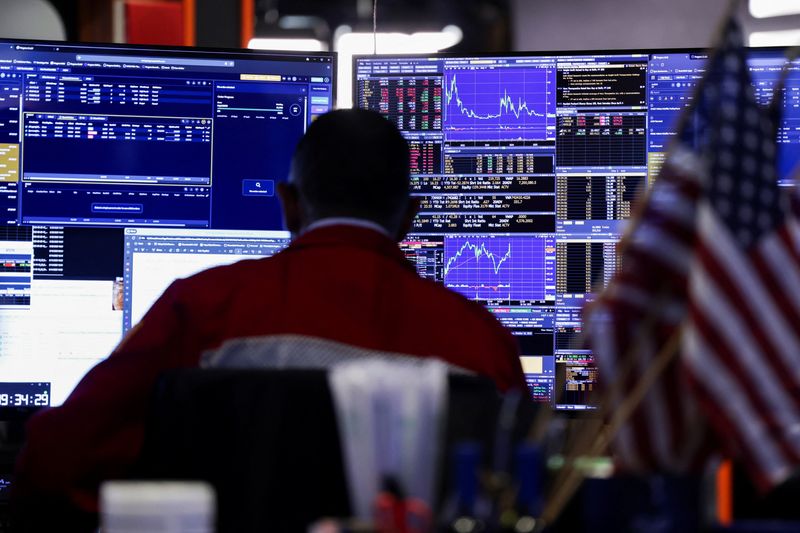
Fear over the credit quality of U.S. regional banks has resulted in a notable downturn in global financial stocks, reminiscent of the widespread concern that gripped markets two years ago. This selloff has extended to Wall Street’s main indexes, with futures indicating a weaker start, compounding anxieties already fueled by escalating U.S.-China trade tensions and a dimming global economic outlook.
Recent auto bankruptcies in the United States have reignited worries surrounding lending practices, echoing the aftermath of Silicon Valley Bank’s failure. High interest rates had previously created substantial paper losses on bank bonds, leading to a rout in bank stocks worldwide. Investors are now scrutinizing whether the latest issues in the U.S. credit market will similarly impact the financial landscape.
Market analysts suggest current concerns about regional banks may be more isolated rather than indicative of systemic risk. According to Russ Mould, investment director at AJ Bell, specific banks have raised red flags, pointing to Zions reporting an unexpected loss on its loans and Western Alliance accusing a borrower of fraud.
In premarket trading, top U.S. banks such as Bank of America and Citigroup experienced declines of 0.33% and 0.4%, respectively. James Rossiter from TD Securities noted that the adverse momentum from U.S. banking selloffs was felt globally, shortly affecting markets in Asia and Europe. European bank stocks fell nearly 3%, with significant losses for major players like Deutsche Bank and Barclays, both down about 6%.
Although many regional banks benefitted from solid earnings, investor sentiment remained cautious amidst the turmoil. The recent downturn saw the SPDR S&P regional banking ETF rise by 1% despite closing the previous day with a 6% decline, marking its steepest loss in six months. Zions Bancorp, facing investor scrutiny, managed a small recovery after a 13% drop, while Western Alliance gained 1.2% following an 11% loss the day before.
Analysts are increasingly wary of the overall economy’s health, especially with rising credit losses among regional banks prompting questions about lending practices. The KBW Regional Banking Index fell 6.3%, fueled by Zions’ announcement of a $50 million loss on loans and Western Alliance’s legal troubles. Such data typically wouldn’t cause widespread market panic, but are gaining attention within the context of several recent corporate failures in the private credit market.
Mark Dowding, chief investment officer at RBC BlueBay Asset Management, highlighted the troubling rise in impairments and a default rate reaching 5.5% in private debt. He remarked that the simultaneous weakening of covenants in loan agreements has led to potentially greater losses than historically observed.
This climate of unease has also spread to various sectors in finance, from mortgage lenders to buy-now-pay-later firms, raising concerns that any cracks in Wall Street’s credit might ripple outwards. Companies like BNPL lenders Affirm and Klarna faced declines of 2.3% and 0.4%, respectively, while consumer finance firm SoFi saw a drop of 1.3%.
Reflecting on the current state of credit markets, JPMorgan Chase CEO Jamie Dimon cautioned about the potential for hidden issues, stating, “When you see one cockroach, there are probably more.”
Bo Pei, an analyst at US Tiger Securities, commented on market pricing strategies, noting that the market seems overly optimistic. This heightened vulnerability means even minor negative headlines could lead to significant downturns, as evidenced by recent events. Notably, European bank shares have surged approximately 40% year-to-date, while global stocks have seen a 16% rise, largely driven by enthusiasm surrounding the AI boom. Meanwhile, gold prices have reached a new high, marking their best week in over 17 years.
Analysts such as Alan Devlin from Impax Asset Management have expressed concerns about a potential bubble in private credit, suggesting that current market behaviors reflect a tendency to react swiftly in the face of new, negative information.