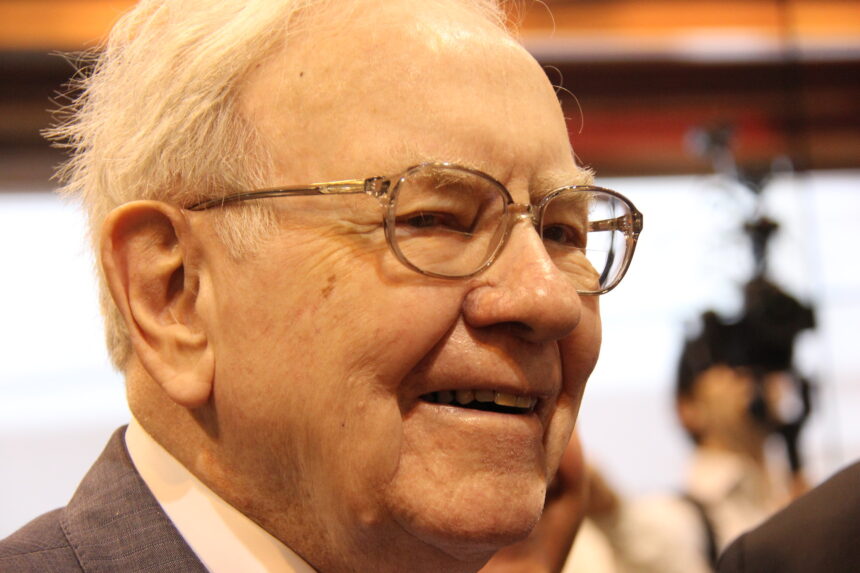
Warren Buffett’s influence on investment strategies is hard to overstate, particularly with his success in managing Berkshire Hathaway since 1965. Under his leadership, the company has ascended to a market capital of over a trillion dollars, showcasing annualized growth of around 20%. In stark contrast, the S&P 500 has increased by approximately 10% annually over the same period, a testament to Buffett’s exceptional management and investment tactics.
Buffett’s consistent advice to retail investors is to consider investing in an S&P 500 exchange-traded fund (ETF). While this approach might not seem as thrilling as high-stakes individual stock trading, research from Julian Emanuel of Evercore ISI suggests it could yield an impressive 37% return by the end of 2026.
The S&P 500 index encompasses 500 of the largest publicly traded companies in the United States, effectively mirroring the nation’s broader economic landscape. As of August 31, the sector breakdown highlights significant representation from information technology, financials, and consumer discretionary sectors, among others. Notably, the tech sector alone constitutes a staggering 33.5% of the index due to market capitalization weighting—larger companies hold more sway within the index. The recent surge in demand for artificial intelligence solutions has further propelled major tech stocks, inflating their presence in the S&P 500’s overall valuation.
Investors looking for a reliable S&P 500 ETF may consider the Vanguard S&P 500 ETF (VOO), a fund characterized by its low cost with an expense ratio of just 0.03%. This structure allows investors to essentially pay $0.30 annually for every $1,000 they hold.
Looking to the future, Emanuel believes there’s potential for a bull market to elevate the S&P 500 to about 9,000 by the end of 2026, projecting the Vanguard ETF’s price could reach approximately $825. This forecast stems from expectations that ongoing AI advancement will enhance earnings for S&P 500 companies, thereby bolstering investor confidence and injecting more capital into the market.
While past performance does not guarantee future outcomes, it can offer valuable insights into potential investment trajectories. Historically, the S&P 500 has averaged annual returns of 10%, with even more notable returns of about 12.5% over the past decade, and 14.5% when reinvested dividends are taken into account. These figures suggest that, regardless of whether the Vanguard ETF reaches the ambitious target set forth by Emanuel, it still represents a solid and dependable investment option for a diversified portfolio.
Despite the inherent unpredictability of stock market investments, the broad-based nature and historical resilience of S&P 500 index funds like the Vanguard S&P 500 ETF position them as foundational elements for many investors seeking to achieve long-term financial objectives.