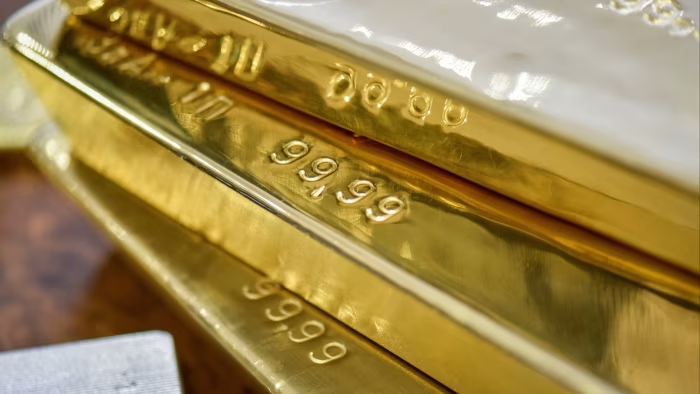
Gold prices have been on a remarkable upswing, driven significantly by increased activity from central banks around the globe. A report from the European Central Bank (ECB) in June highlighted that central bank demand for gold in 2024 has reached unprecedented levels, constituting over 20% of global demand. This marks a striking contrast to the trend observed during the 2010s, when central banks accounted for approximately 10% of global gold demand.
However, the official data regarding central bank gold holdings presents a more nuanced picture. Reports indicate that these holdings increased by 228 tonnes over the last year, a quantity equating to the weight of about forty African bush elephants. While this appears substantial on the surface, it actually places the year’s figures in the bottom quartile when compared to gold purchases over the past five and even fifteen years.
The surge in discussions about central bank buying may not strictly correlate with the reported figures. When considering estimates for ‘unreported’ gold demand—as suggested by analysts—total central bank purchases could soar to an impressive 804 tonnes. This staggering number engages with a narrative that situates these purchases firmly within the top tercile of the last five and ten years, as well as the top quartile of the past fifteen years.
The term ‘unreported’ purchases raises questions about the reliability of gold demand estimates. Official gold holding statistics are derived from the International Monetary Fund (IMF), where reporting is voluntary. The ECB noted that, for instance, the Central Bank of Russia ceased reporting its gold purchases just before sanctions were imposed, suggesting it was likely a significant buyer in 2022. As a result, organizations like the World Gold Council (WGC) have stepped in to provide estimates concerning unreported purchases, despite the complex landscape of the gold market.
Estimating these unreported purchases poses considerable difficulties. While the WGC aims to provide a clearer picture, they outsource some of their estimates to Metals Focus, an independent consultancy. The lack of transparency in the data gathering process complicates the reliability of these estimates, as much of the information is derived from off-the-record discussions with industry players such as miners and bullion dealers.
Historically, the WGC collected its data from GFMS Thomson Reuters until it transitioned to Metals Focus around 2010. This shift was gradual, aimed at maintaining stability in published estimates and minimizing market disruptions. Nonetheless, this very necessity underscores the inherent challenges in arriving at accurate estimates, showcasing that significant artistry is involved in data interpretation within this sector.
Amidst these complexities, the narrative framing gold’s increase in value largely stems from intuitive associations with central bank activity. The geopolitical context, particularly following Russia’s invasion of Ukraine and the subsequent freezing of the Russian central bank’s reserves, has heightened concerns regarding the safety of digital assets controlled by foreign entities. As a result, many investors are gravitating towards precious metals like gold, perceived as a secure alternative.
This interplay between gold prices and central bank demand highlights a significant shift in investor sentiment, as individuals increasingly view gold as a hedge against geopolitical uncertainty and inflation. While official purchases may indicate a more conservative landscape, the estimates surrounding unreported holdings suggest a robust demand for gold that might be more expansive than official numbers reveal. This complex tapestry surrounding gold purchasing reflects broader economic anxieties and the evolving dynamics between traditional fiat currencies and physical assets in uncertain times.