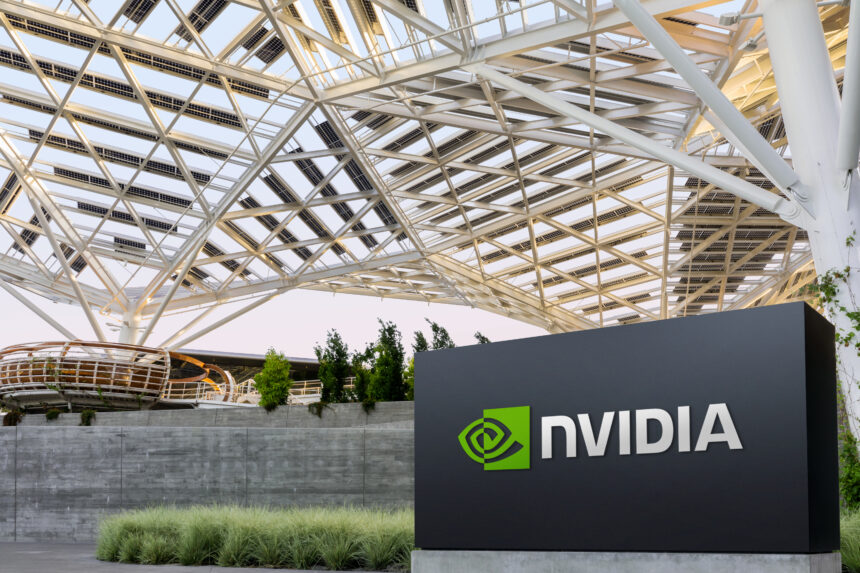
Nvidia has emerged as a dominant force in the artificial intelligence (AI) sector over the past three years, recently securing its position as the largest company in the world, surpassing Apple, which previously held that title with a valuation of $2.28 trillion. Nvidia’s climb from a valuation of $298 billion to its current status can largely be attributed to soaring demand for AI technologies that heavily rely on its graphics processing units (GPUs). These GPUs are essential for various high-demand applications, including gaming, engineering simulations, cryptocurrency mining, and AI model training.
As Nvidia’s revenue and profits have skyrocketed in response to this unprecedented AI demand, investors are left pondering the company’s trajectory over the next three years. Analysts are presenting two key scenarios regarding Nvidia’s future, with a stronger likelihood leaning towards continued growth fueled by AI advancements.
The ongoing demand for AI is expected to remain robust, especially as major AI hyperscalers have announced significant partnerships with Nvidia and its allies, anticipated to lead to record levels of data center capital expenditures by 2026. This outlook, however, is tempered by growing concerns regarding Nvidia potentially losing market share to competitors such as AMD and Broadcom.
AMD has recently forged a critical partnership with OpenAI, the organization behind ChatGPT, effectively positioning its products as viable alternatives to Nvidia’s offerings. This shift raises the possibility that some companies may opt for the more cost-effective AMD hardware, thereby impacting Nvidia’s market presence. Concurrently, Broadcom is developing custom AI accelerator chips optimized for specific workloads, which, while not direct competitors to Nvidia’s offerings, may attract major AI hyperscaler contracts due to their performance-to-cost ratio.
Despite these challenges, Nvidia holds a substantial competitive edge, boasting an estimated market share of approximately 90% in the AI computing space. Its GPUs remain the preferred choice for training and executing AI models, indicating resilience amid growing competition.
Projections for global AI spending are also creating a favorable environment for Nvidia. While skeptics questioned Nvidia’s forecast during its recent earnings call—estimating that global data center expenditures could reach between $3 trillion and $4 trillion by 2030—Wall Street has echoed these sentiments with similar heightened forecasts for AI investment in the near future. Nvidia anticipates that data center capital expenditures could amount to around $600 billion this year alone, which would suggest a compound annual growth rate (CAGR) of about 42%. If the company achieves an ambitious 40% growth rate over the next five years, its valuation could skyrocket from $4.58 trillion to nearly $25 trillion.
This potential transformation raises significant questions about the sustainability of Nvidia’s remarkable growth. Should the AI market expand as projected and Nvidia maintain its dominant position, the company’s stock may prove to be an attractive investment at current levels. Conversely, any decline in AI spending or substantial loss of market share could lead to a significant dip in Nvidia’s stock price.
As the AI landscape continues to evolve, the long-term implications of these trends remain uncertain. However, an AI-first society is beginning to take shape, bolstering the belief that the estimated spending levels are achievable. Investors and market watchers alike will be keenly observing Nvidia’s journey in the coming years, as the company seems poised to play a pivotal role in the future of AI technology.