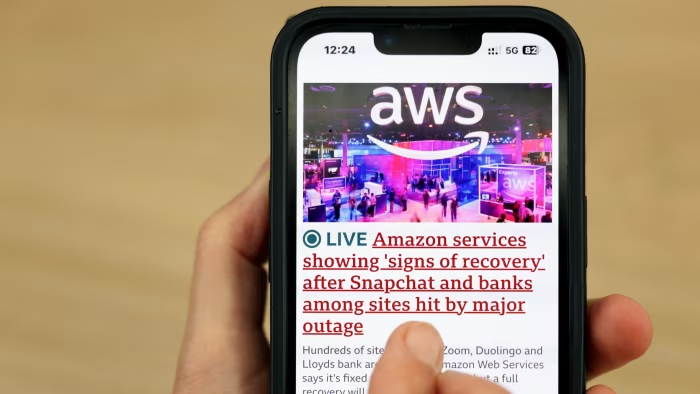
Businesses worldwide are grappling with the repercussions of a significant outage in Amazon’s cloud services, which left many popular platforms such as Zoom, Snapchat, Reddit, and ChatGPT temporarily inaccessible. The disruption not only affected end-users but also presented a unique irony when Slack—a communication tool widely used by IT departments to report incidents—was also down.
This incident marks another chapter in a series of outages associated with cloud services, a trend that has become increasingly critical as digital activity continues to grow exponentially. The impact of this outage is magnified by the staggering growth of Amazon Web Services (AWS), which now generates nearly $130 billion annually, a substantial increase from $20 billion five years ago. With cloud dependency on the rise, even minor glitches can have significant ripple effects.
In light of this situation, businesses are urged to revisit their contingency plans. Relying solely on one cloud provider can be perilous, prompting many companies to explore diversification strategies. This can involve duplicating data across various servers and locations to mitigate risks. However, these solutions come with their own sets of complexities and costs. Some organizations found that even hosting data outside the US did not completely shield them from the outage due to a dependence on critical operations based in the eastern US.
A more robust strategy is multi-cloud computing, where companies share data among different cloud providers, including major players like Google and Microsoft, as well as emerging providers such as DigitalOcean and Vultr. While this approach enhances resilience, it also introduces additional expenses, as providers often charge fees for storage and for data transfers between clouds.
The frequency of these outages is prompting a shift in priorities for many businesses. The common standard of 99.9 percent uptime, which equates to nearly nine hours of downtime annually, may no longer be deemed sufficient. Organizations are now beginning to realize that even the “three nines” of reliability might not provide the level of assurance they require.
The rising frequency of such incidents highlights the necessity for improved resilience alongside existing investments in cybersecurity. As companies look to buffer against future risks, the demand for enhanced cloud and data center services is likely to increase, potentially benefiting infrastructure providers, including Amazon itself. This uptick in tech budgets could further bolster a sector already experiencing rapid growth, fostering continued investment even amid concerns of market bubbles.