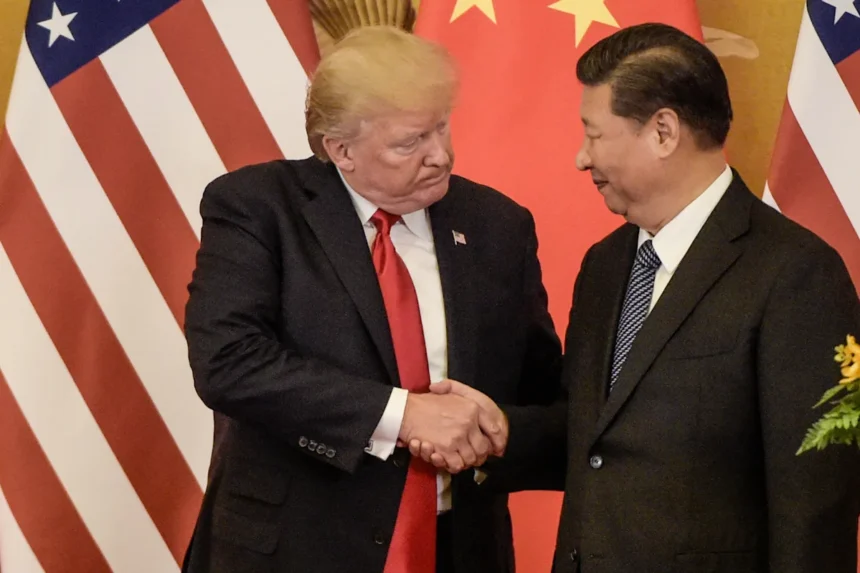
A potential meeting between Donald Trump and Xi Jinping later this month has ignited debates about its implications for China’s declining stock market. Recent trends show that while Chinese equities performed strongly for much of the year, they have recently begun to falter. The MSCI China Index has dropped approximately 3.9% during October, significantly lagging behind the 2.3% increase observed in the MSCI Asia Pacific Index. This downturn marks the most considerable underperformance of Chinese markets against the US stock market since the trade dispute emerged in April.
As the two leaders prepare for their discussions at the Asia-Pacific Economic Cooperation summit, analysts are divided on whether investors should view the recent drop in stock prices as an opportunity for buying or as a concerning signal for the future.
Bank of America Corp. analysts have adopted a bullish stance, encouraging investors to maintain a “risk-on” approach until the end of the month. They believe that the high-profile meeting between Trump and Xi, alongside China’s fourth plenum political gathering, could serve as catalysts for a rebound in the market. Similarly, analysts from Goldman Sachs Group Inc. suggest that investors should adopt a “buy the dip” mentality, projecting a potential 30% increase in Chinese stocks by the end of 2027.
In contrast, Morgan Stanley expresses caution, advising against buying during this dip, citing the ongoing potential for renewed trade tensions. Strategists such as Laura Wang recommend waiting for a 10% to 15% decline in the MSCI China Index, alongside clearer indications of a resolution to the trade conflict, before considering re-entry into the market.
Chetan Seth of Nomura Holdings Inc. also highlights concerns, arguing that current risk-reward scenarios are unfavorable post-recent rallies. According to his analysis, the MSCI China Index will only become “meaningfully attractive” once its forward price-to-earnings ratio falls below 11 times, as it currently hovers around 12.8 times based on Bloomberg data.
Trump has remained optimistic about the upcoming discussions, asserting that a beneficial trade deal is possible and highlighting his strong rapport with Xi. However, he has also acknowledged that the anticipated talks could end up not taking place.
As investors consider the future trajectory of the market, a key question looms: who will lead the next phase of the rally? While China’s vast $23 trillion in household deposits continue to inspire hope for a gradual bull market, recent momentum has been primarily driven by local and foreign fund investments.