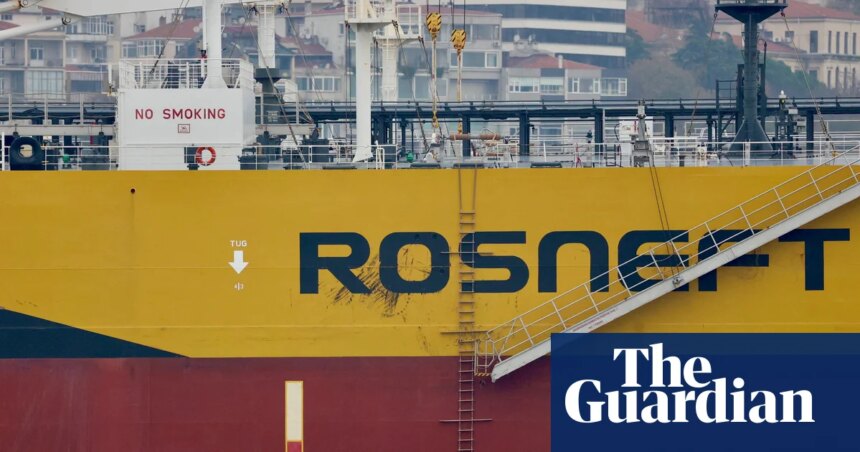
Oil prices surged following the announcement of new sanctions by former President Donald Trump targeting Russia’s largest oil producers, intensifying pressure on President Vladimir Putin to end the ongoing conflict in Ukraine. Brent crude climbed by 3.5%, reaching $64.53 per barrel after the U.S. imposed restrictions on Rosneft and Lukoil, the two biggest oil companies in Russia.
Under the new sanctions, all U.S. assets belonging to these firms have been frozen, and American individuals and companies are prohibited from engaging in business with them. In a significant escalation, the U.S. government also warned of potential secondary sanctions on foreign financial institutions that facilitate transactions with Rosneft and Lukoil, affecting banks involved in sales of Russian oil to countries like China, India, and Turkey.
Reports indicate that these sanctions are already influencing the market dynamics, with Indian refiners reportedly preparing to drastically cut their imports of Russian oil. Reliance Industries, the largest buyer of Russian crude in India, is considering reducing or completely halting its imports, according to unnamed sources cited by Reuters. This development comes amid America’s previous imposition of a 50% tariff on many Indian goods in August, likely in response to India’s increased purchases of discounted Russian oil since the invasion of Ukraine.
The sanctions mark Trump’s first significant action against Russia since re-assuming the presidency in January. In his remarks from the Oval Office, Trump described the measures as “tremendous,” expressing hopes that they would not remain in place for long and that the conflict in Ukraine could be resolved. He stated, “Hopefully he’ll become reasonable, and hopefully Zelensky will be reasonable. You know, it takes two to tango, as I say, and we’ll find out.”
In a parallel move, the European Union announced its own sanctions, set to be enacted shortly, which include a ban on Russian liquefied natural gas imports. U.S. Treasury Secretary Scott Bessent emphasized that the administration is prepared to take additional steps to support Trump’s efforts to end the conflict, encouraging allies to align with the sanctions.
The British government had recently imposed sanctions on both Rosneft and Lukoil. While the EU had already targeted Rosneft—owned by the Russian state—it had not yet applied the same measures against Lukoil, a privately owned entity, largely due to exemptions for Hungary and Slovakia, which are dependent on Russian oil.
Additionally, Trump confirmed the cancellation of a scheduled summit with Putin, stating, “It didn’t feel right to me. It didn’t feel like we were going to get to the place we have to get, so I cancelled it. But we’ll do it in the future.” Analysts from Deutsche Bank predict that oil prices are now poised for their largest gain since July, reflecting the growing volatility in the energy market due to geopolitical tensions.