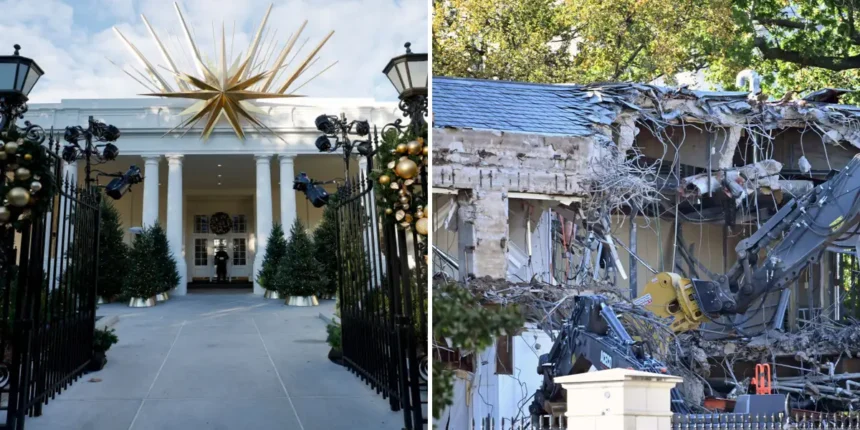
The White House’s East Wing is undergoing a significant transformation as demolition begins to pave the way for a new ballroom envisioned by President Donald Trump. Originally constructed in 1902, with an expansion by President Franklin D. Roosevelt in 1942, the East Wing has served various purposes over the decades, including housing the Office of the First Lady and facilitating public tours.
This ambitious project will replace the current East Wing with a massive 90,000-square-foot ballroom, reportedly costing $300 million and capable of accommodating 650 guests—a substantial upgrade compared to the East Room, which holds only 200. Prior to the demolition beginning on Monday, changes already made to the White House include ornate gold furnishings in the Oval Office and alterations to the Rose Garden.
In an official statement, the White House described the renovation as “a bold, necessary addition” that continues the tradition of enhancing the executive residence. While renovations have been part of the White House’s history, the scope of this project is unprecedented in recent decades. Before-and-after photos have begun to illustrate the evolving appearance of the complex.
The transformative effort was made necessary, as explained by press secretary Karoline Leavitt, due to recommendations from architects and construction firms about creating a stable, forward-looking structure. Trump confirmed publicly that the entire East Wing would be demolished, asserting that this significant change is vital to achieving the desired modernity and aesthetic appeal.
Public reaction has been mixed. The National Trust for Historic Preservation expressed “deep concern,” warning that the new ballroom could disrupt the classical design of the White House. They urged the administration to pause demolition and allow for proper public review processes, which include consultation with the National Capital Planning Commission and the Commission of Fine Arts.
Critics, including former presidential candidate Hillary Clinton, echoed concerns regarding the demolition. Clinton articulated discontent over the alterations, emphasizing that the White House should be preserved for public benefit rather than personal redesign.
In response to the backlash, the White House dismissed critics as “unhinged leftists,” framing their concerns as manufactured outrage. The administration emphasized the historical precedent for renovations under past presidents, defending the project as a continuation of those meaningful modifications.
As demolition continues, historical preservationists and members of the public remain vocal about their concerns, indicating that the future of the ballroom project may be contested as it undergoes necessary reviews and considerations.