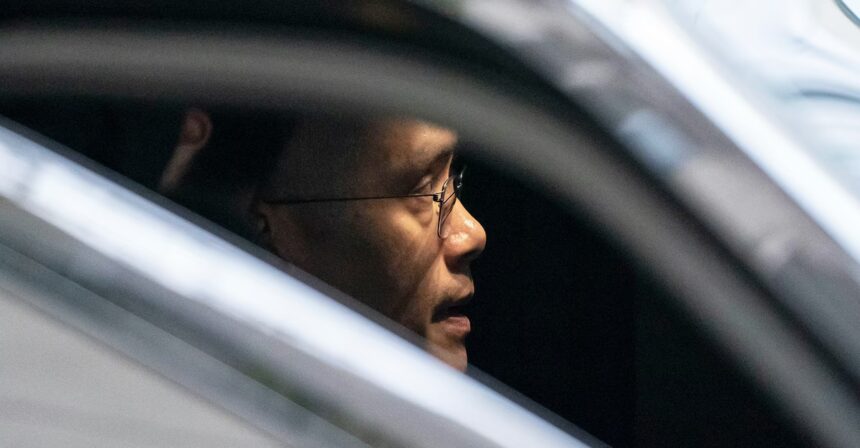
In a striking move this week, President Donald Trump exercised his clemency powers with the controversial pardoning of Changpeng Zhao, a key figure in the cryptocurrency sector. Zhao, who was the CEO of Binance, the world’s largest cryptocurrency exchange, had previously pled guilty to violating anti-money-laundering regulations and faced significant legal repercussions which included a $4.3 billion settlement with the U.S. Treasury Department and a four-month prison sentence.
The pardon has raised eyebrows, particularly in light of recent allegations that Binance facilitated transactions tied to illicit activities, including aiding cybercriminals and terrorist groups. Former Treasury Secretary Janet Yellen described the company’s oversights during Zhao’s tenure as “willful failures.” Notably, despite having served prison time, Zhao had remained barred from overseeing Binance operations, creating questions about the implications of his pardon.
The relationship between Zhao and Trump has been under scrutiny, especially as it developed in tandem with financial dealings that could be beneficial for the Trump family. Binance was reportedly involved in developing the code for a stablecoin linked to World Liberty Financial, a start-up co-founded by Trump’s sons. A significant infusion of $2 billion from an Emirati-backed firm into Binance further complicates matters, as it has the potential to generate substantial revenue for the Trumps.
Zhao himself actively sought this pardon, spending months building connections within Trump’s circle. He enlisted legal assistance from Teresa Goody Guillén of BakerHostetler, a firm that has ties to both World Liberty Financial and lobbyist Ches McDowell, who has personal connections to Trump’s family. Despite the apparent effort to connect with Trump’s sphere, the president seemed less than familiar with Zhao in a recent briefing, referring to him merely as “the crypto person.”
Legal experts have noted that Trump’s approach to pardons has shifted noticeably. According to Lee Kovarsky, a law professor, recent pardons appear to cater to political allies or influential industries and are sometimes linked to financial contributions supporting Trump. Past examples have included individuals like Ross Ulbricht, founder of the Silk Road, who was granted clemency as a nod to the crypto community.
Zhao’s pardon encompasses both personal loyalty and potential financial incentives for Trump, further illustrating the administration’s unorthodox use of pardon powers. As Trump continues to redefine clemency, it raises concerns about who truly benefits from such actions, leading to the suggestion that clemency might turn into a transaction of loyalty for financial gain.
In related news, Trump announced a private donor contribution of $130 million to support U.S. troops during a government shutdown, a move that may contravene the Antideficiency Act prohibiting federal entities from accepting unsolicited funds. Additionally, trade negotiations with Canada have been stalled due to a politically charged advertisement invoking Ronald Reagan.
As Trump’s presidency unfolds, the implications of his recent pardons, especially in the realm of cryptocurrency, raise questions about the intersection of legality, loyalty, and profit—a complex web that could shape future pardons and regulations in the industry.