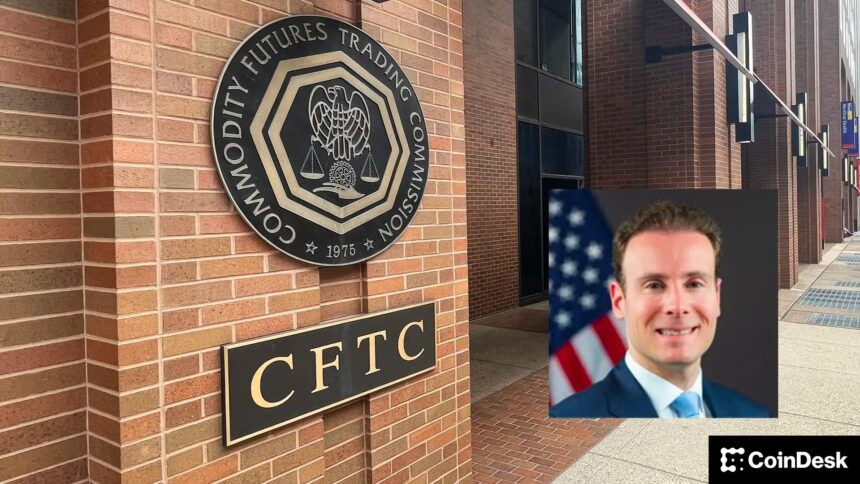
President Donald Trump has officially nominated Mike Selig as the new head of the U.S. Commodity Futures Trading Commission (CFTC), marking a significant change in leadership after the withdrawal of former CFTC Commissioner Brian Quintenz from consideration. This decision carries weight particularly for the burgeoning crypto industry, as the CFTC is expected to play a critical role in the regulation of digital asset transactions, especially in light of current legislative efforts in Congress.
If Selig secures Senate confirmation, a challenge that Quintenz did not overcome, he will likely influence the implementation of new U.S. policies regarding cryptocurrency. David Sacks, the White House Crypto Czar, expressed confidence in Selig’s capabilities, highlighting his previous role as Chief Counsel of the SEC Crypto Task Force and his extensive experience in traditional commodities markets from his time at the CFTC under former Chairman Chris Giancarlo.
Selig, who has been recognized as a leading candidate for this role for some time, conveyed his gratitude for the nomination via social media. In his statement, he emphasized his commitment to fostering efficient commodity markets, promoting innovation, and assisting the President in designating the United States as the global hub for cryptocurrency.
Support for Selig’s nomination is echoed by industry leaders. Summer Mersinger, CEO of the Blockchain Association and a former CFTC commissioner, commented on Selig’s qualifications, asserting that his in-depth understanding of both financial markets and digital assets positions him well to provide “clarity, balance, and forward-looking guidance” to the CFTC’s activities.
The agency’s relationship with the crypto industry has evolved over the years, particularly under notable past decisions like recognizing Bitcoin as a commodity in 2015 and the approval of crypto futures in 2017. Currently, the CFTC is in a dynamic regulatory environment, especially with proposals like the Digital Asset Market Clarity Act, which seeks to give the CFTC direct oversight of spot trading for major cryptocurrencies such as Bitcoin and Ethereum. The House has already passed this legislation, while the Senate continues to deliberate its version.
In the meantime, Selig’s SEC efforts have gained momentum under Chairman Paul Atkins, who has prioritized industry regulation. The CFTC, under Acting Chairman Caroline Pham, has also been striving to keep pace with these emerging challenges in the crypto sector. However, Pham’s potential departure and the ensuing delay of Quintenz’s confirmation have created uncertainty within the commission.
As the industry looks to adapt to Selig’s nomination, voices from various sectors emphasize the importance of his understanding of both technological innovation and regulatory frameworks. Amanda Tuminelli, Executive Director of the DeFi Education Fund, remarked on Selig’s balance of fostering innovation while ensuring legal compliance. Ji Kim, CEO of the Crypto Council for Innovation, echoed this sentiment, asserting that Selig’s regulatory expertise is crucial at this pivotal moment for the CFTC and the cryptocurrency landscape.
Overall, Selig’s nomination signals a potential shift in how the U.S. approaches cryptocurrency regulation, with implications that could resonate throughout the market and among investors.