Solana (SOL) has emerged as a frontrunner in the cryptocurrency landscape of 2025, capturing significant attention due to its innovative technology and expanding global presence. The blockchain platform has gained favor for its remarkable speed, minimal transaction fees, and scalable architecture, traits that render it particularly suitable for developing decentralized applications (dApps), decentralized finance (DeFi) platforms, and non-fungible tokens (NFTs). Both investors and developers are increasingly attracted to Solana, spurred by its technical prowess and a growing user base worldwide.
At the heart of Solana’s capabilities lies its unique consensus mechanism, which integrates Proof of History (PoH) with Proof of Stake (PoS). This combination allows Solana to handle thousands of transactions per second at a fraction of the cost compared to many competing networks. As a result, developers are energized to roll out pioneering projects across various sectors, including finance, gaming, and the NFT marketplace. Recent developments on the platform illustrate its upward trajectory: noteworthy launches range from prediction markets employing bonding curves to new stablecoin transfer services and innovative entertainment-focused NFTs tailored for mobile users.
Solana’s proactive outreach also includes events like the Solana APAC Accelerate series, which has taken the platform to major cities such as Shanghai, Hangzhou, and Shenzhen. These events underscore Solana’s commitment to broadening its influence and accessibility on a global scale.
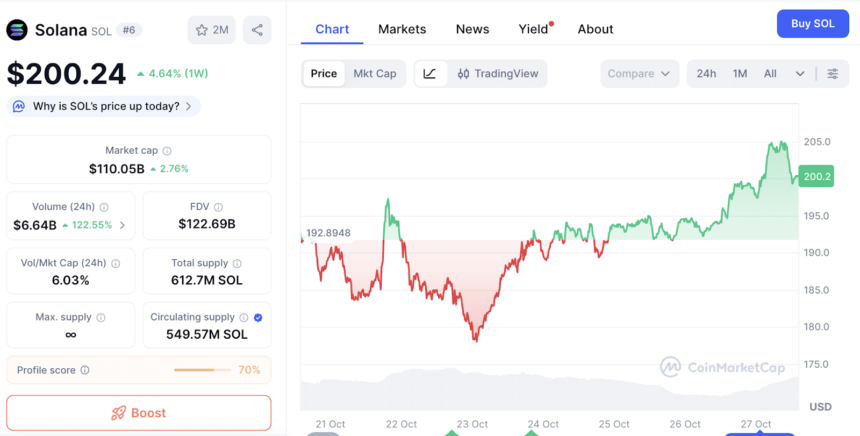
The SOL token serves as the native cryptocurrency within the Solana ecosystem, facilitating transaction fees, staking opportunities, and governance activities. Presently, there are approximately 370 million SOL tokens in circulation, and the network incorporates deflationary mechanisms designed to incentivize long-term holding while fostering overall growth.
The adoption of Solana is marked by significant milestones: retail investors now have broader access via major brokerage firms, and Hong Kong has approved its first Solana Spot ETF. Additionally, a variety of smaller projects are emerging, showcasing the development of Solana-native wallets and dApps. Investors interested in entering the market will find that acquiring SOL is a straightforward process through various supported platforms.
For U.S. investors, there are numerous avenues to purchase SOL. Common exchanges enable users to buy the cryptocurrency using fiat currency, a method that simplifies the process for newcomers. Fast payment options, such as Google Pay, further streamline transactions, allowing for quick and efficient purchasing experiences.
Tech-savvy investors who prioritize both speed and convenience can leverage digital wallets or services that allow for purchasing crypto using Google Pay to seamlessly integrate into the Solana ecosystem.
Given Solana’s impressive combination of high transaction speeds, low fees, and a vibrant developer community, it presents a compelling case for both investors and technologists. High-profile achievements—including surpassing hundreds of millions in on-chain revenue, introducing Solana credit cards, and creating innovative prediction markets—highlight its real-world applicability and growing traction.
While any investment carries inherent risks, Solana’s technical strengths, enthusiastic community, and expanding opportunities suggest it may represent a promising addition to a diversified cryptocurrency portfolio.