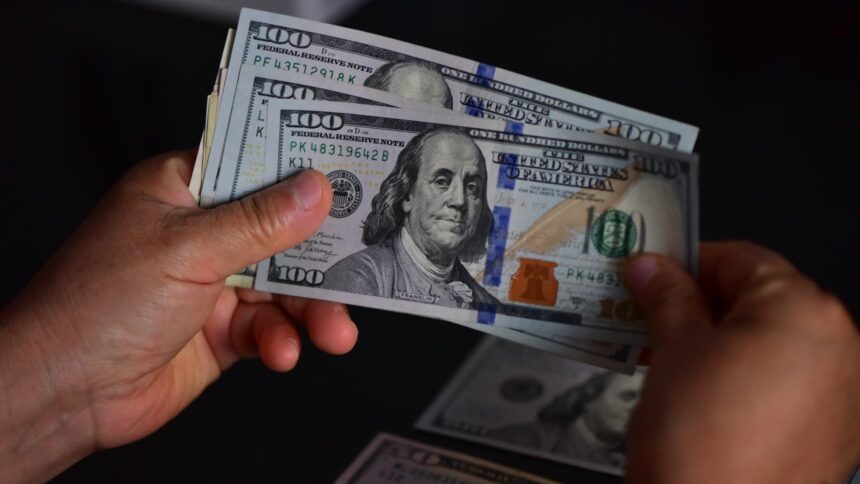
The dollar experienced a decline on Tuesday as investors braced for a series of central bank meetings, with expectations pointing towards a potential interest rate cut in the U.S. The sentiment was further influenced by President Donald Trump’s ongoing tour of Asia, where speculation around a trade deal with China loomed large.
Despite some encouraging signs on Monday about easing trade tensions between the U.S. and China, which led to a risk rally and a weakened dollar, investors remained cautious about the prospects of a robust trade agreement. Attention is especially focused on the high-stakes meeting between Trump and Chinese President Xi Jinping scheduled for Thursday in South Korea. Trump expressed optimism to reporters, stating his respect for President Xi and suggesting that a deal is possible.
However, Chinese officials have maintained a reserved stance regarding the negotiations, offering little insight into the expected outcomes. This cautious atmosphere contributed to relatively stable currency markets, with the euro reaching a one-week high at $1.1655 in early trading, while the British pound held steady at $1.3344.
The dollar index, which gauges the U.S. currency against six other major currencies, remained steady at 98.786, reflecting a slight 0.15% drop from the previous session. Carol Kong, a currency strategist at Commonwealth Bank of Australia, noted that while markets do not have lofty expectations for a comprehensive trade deal from the Trump-Xi meeting, progress in discussions and the possibility of the U.S. reducing tariffs on China could still uplift sentiment.
As the focus also shifted to the Federal Reserve meeting, market analysts anticipated a 25-basis-point rate cut, already factored into market prices. Investors were keen to observe any indications from the central bank on the winding down of its quantitative tightening program. The ongoing U.S. government shutdown has complicated the economic data landscape, leading to speculation about the Fed’s future monetary policy decisions.
Goldman Sachs chief U.S. economist David Mericle spoke to market expectations, suggesting that while formal guidance regarding the December meeting is unlikely, Fed Chair Jerome Powell could reference implications from previous meetings indicating a third rate cut may be on the horizon due to impacts from the government shutdown on labor market data collection.
Meanwhile, the Japanese yen appreciated, trading at 152.42 per U.S. dollar, ahead of an anticipated Bank of Japan meeting, where no rate changes are expected. However, insights into future rate hikes will be closely monitored. Additionally, Trump’s discussions with Japan’s new Prime Minister Sanae Takaichi will also center on trade issues.
In Europe, the European Central Bank is similarly anticipated to maintain steady rates during its Thursday meeting, while speculation remains about potential easing in the coming year. The Australian dollar, often viewed as an indicator of risk appetite, rose slightly to $0.6563, marking a two-week high, alongside a modest increase for the New Zealand dollar to $0.5778.
Chris Weston, head of research at Pepperstone, commented on the current market trend, noting that the global macroeconomic environment appears stable enough to support ongoing investment in risk assets. He highlighted the effect of the government shutdown in limiting potential volatility in economic data, coupled with a resilient economy and a market inclined towards risk-taking, which has fostered a favorable environment for buying riskier assets.