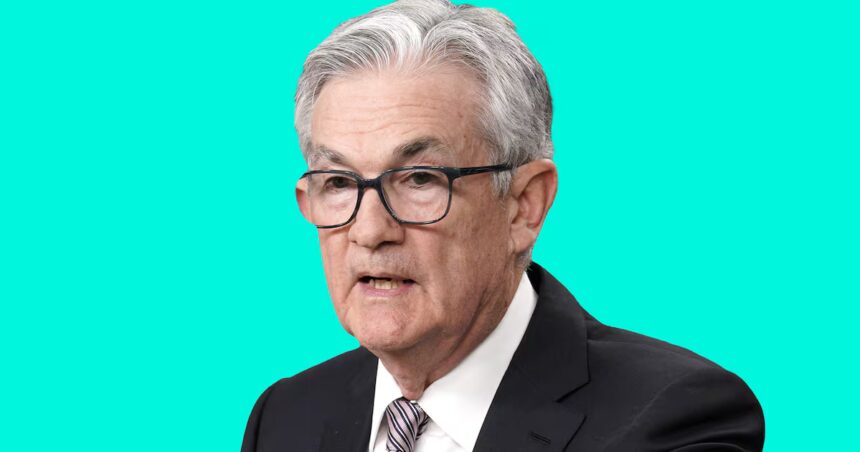
On Wednesday, the Federal Reserve is anticipated to announce a 0.25% reduction in interest rates. This move is expected to benefit risk-on assets, with significant attention being focused on the central bank’s decisions. Analysts foresee an additional 0.5% decrease in rates by the end of the year. James Butterfill, CoinShares’ head of research, expressed confidence in the likelihood of further cuts, projecting a 25 basis point reduction in October and another 50 basis points in December.
Data supports this outlook, as the CME FedWatch tool indicates a nearly 100% probability of a 0.25% cut during the upcoming Federal Open Market Committee meeting. Similarly, betting sentiments from the crypto-betting platform Polymarket suggest a 98% chance for a cut this month and an 89% likelihood for the December meeting.
This central bank meeting comes amid a significant geopolitical development, with US President Donald Trump scheduled to meet Chinese President Xi Jinping on Thursday to negotiate a new trade deal aimed at mitigating mounting tensions between the two nations.
The implications of these events on cryptocurrency prices are not expected to be profound. Thomas Perfumo, a global economist at the crypto exchange Kraken, indicated that the broader macroeconomic conditions are the primary driving forces behind the current crypto cycle. He acknowledged the likelihood of another rate cut at the Fed’s December meeting, yet maintained that the overall outlook remains positive as the central bank signals a shift towards a renewed rate-cutting cycle.
However, the ongoing trade tensions between the US and China introduce a layer of uncertainty into the Fed’s decision-making process. Tariffs traditionally exacerbate inflation, presenting an argument against rate cuts, yet they can also impede economic growth by increasing costs and disrupting supply chains, which would create a case for cuts. The Federal Reserve finds itself navigating the delicate balance between combating inflation and bolstering economic growth.
Despite these complexities, Butterfill asserts that Bitcoin’s performance is unlikely to be significantly impaired, even in light of recent price corrections tied to US-China trade tariff announcements. He explained that the risks posed by trade tensions are more impactful on equities than on digital assets. While corporate earnings often suffer due to increased input costs associated with tariffs, Bitcoin’s value proposition—serving as an inflation hedge and an alternative to traditional fiat currencies—could even be reinforced if trade conflicts escalate.
Contrary to this expectation, Bitcoin has experienced a downturn, shedding 10% of its value in recent weeks. This decline is attributed, in part, to the liquidation of $19 billion in leveraged positions, coinciding with Trump’s renewed focus on a trade war with China. Currently, Bitcoin trades around $113,000, representing a drop of over 10% from its all-time high.