Michael Saylor’s company, Strategy (MSTR), is making significant strides in the financial world by exploring opportunities in credit securities across international jurisdictions. This initiative aims to establish the company as a leading global credit issuer, according to President and CEO Phong Le during the recent Q3 earnings call.
In the call, Le elaborated on the company’s aspirations, stating, “We are also actively laying the groundwork for credit securities in international jurisdictions, positioning Strategy to become a dominant credit issuer globally.” This strategic move not only highlights Strategy’s ambition to extend its financial presence beyond the United States but also emphasizes its goal of becoming a pivotal player in the market for bitcoin-backed and digital asset-based credit instruments.
In terms of financial performance, Strategy reported an impressive operating income of $3.9 billion and a net income of $2.9 billion for Q3, a sharp turnaround from the losses of $432.6 million and $340.2 million experienced in the same quarter the previous year. Earnings per share (EPS) surged to $8.42, up from $1.72 in Q3 2024.
For the first nine months of 2025, the company’s operating income soared to $12 billion, climbing from a loss of $0.8 billion in the same period the prior year. Net income during this timeframe reached $8.6 billion, a significant increase from a $0.5 billion loss last year, and earnings per share surged to $27.71 compared to a loss of $2.71 previously.
The financial obligations of Strategy include $689 million in annual dividends and interest, with $522 million stemming from cumulative preferred shares. Additionally, the company holds $8.2 billion in convertible bonds, which carry a blended interest rate of 0.421%, resulting in approximately $35 million in annual interest payments. Notably, 39% of this convertible debt is currently in the money, although the 2029 and 2030 zero-coupon tranches remain out of the money until their 2028 put dates.
Le reiterated the goal to eliminate convertible debt by 2029, a plan highlighted in the company’s B- credit rating from S&P. Furthermore, Saylor mentioned the company’s multiple to net asset value (mNAV) is currently around 1.25, its lowest since early 2024. He attributed this compression to various factors, including a maturing bitcoin market with reduced volatility, the success of the Interest-Bearing Ledger (IBIT), and the increasing influence of derivatives.
Despite these challenges, Saylor remains optimistic about the potential for digital credit expansion through preferred equities to eventually lift mNAV. Year-to-date, Strategy has raised an impressive $20 billion across six different securities, nearly paralleling the $22.6 billion raised in 2024.
On the regulatory front, the firm clarified its position concerning the recent Treasury and IRS interim guidance issued on September 30, stating it does not anticipate being subject to the Corporate Alternative Minimum Tax on unrealized bitcoin gains.
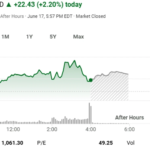
Moreover, for the second consecutive quarter, Strategy has met the qualifications for potential inclusion in the S&P 500. As a result, MSTR shares experienced a pre-market trading increase of 6%, now priced at $270 per share. This positive outlook, coupled with substantial financial gains and ambitious expansion plans, positions Strategy as a formidable player in the evolving landscape of digital assets and credit markets.