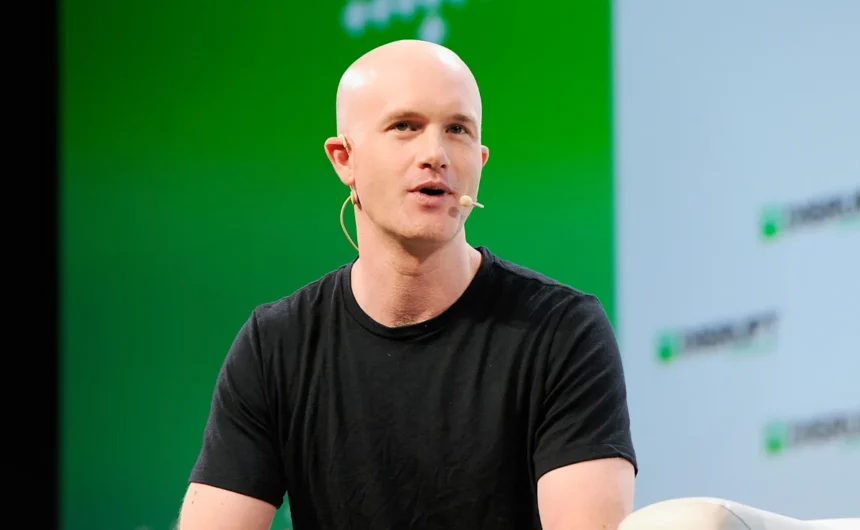
During Coinbase’s recent third-quarter earnings call, CEO Brian Armstrong made an unexpected remark that has caught the attention of the financial community and sparked a debate on the ethics of prediction markets within the cryptocurrency space. At the end of the call, Armstrong confessed to being “a little bit distracted” because he was monitoring wagers placed on “mention markets” related to the company’s potential statements.
In a surprising move, Armstrong articulated several key terms associated with cryptocurrency—specifically “Bitcoin,” “Ethereum,” “Blockchain,” “Staking,” and “Web3”—seemingly to accommodate the predictions made by users on platforms like Kalshi and Polymarket. These platforms allow individuals to stake money on whether specific words will be spoken during corporate earnings calls. According to reports, a sum of $84,000 had been bet on these terms being mentioned during Coinbase’s call, and Armstrong’s acknowledgment of them meant that some users’ bets would pay out.
Critics, however, are not amused. Jeff Dorman, the Chief Investment Officer at digital assets investment firm Arca, expressed his dismay on social media, arguing that manipulating a prediction market in such a public manner undermines the hard work put into educating investors about cryptocurrencies as a legitimate asset class. Dorman emphasized that efforts to foster institutional trust in the crypto industry could be jeopardized by actions like Armstrong’s, which he described as mocking the very industry he represents.
Armstrong’s comments prompted further backlash, with Polymarket branding the incident as “diabolical work.” This criticism not only highlights concerns over the integrity of prediction markets but also raises questions about corporate responsibility among leading figures in the crypto sector.
Coinbase is venturing into the realm of prediction markets with its new Everything Exchange, a move that Armstrong touted during the earnings call. The company has also invested in Kalshi and Polymarket, further intertwining its business operations with the prediction market landscape. A spokesperson for Coinbase clarified that while employees are prohibited from engaging in prediction markets related to the firm, the incident has undoubtedly raised eyebrows.
After the earnings call and its ensuing controversy gathered momentum, Armstrong took to social media platform X to downplay the situation, claiming the outburst was spontaneous, triggered by a colleague sharing a link in the chat.
The incident not only highlights the growing intersection between cryptocurrency and prediction markets but also leaves a lingering question about the ethical obligations of market leaders in this evolving landscape.