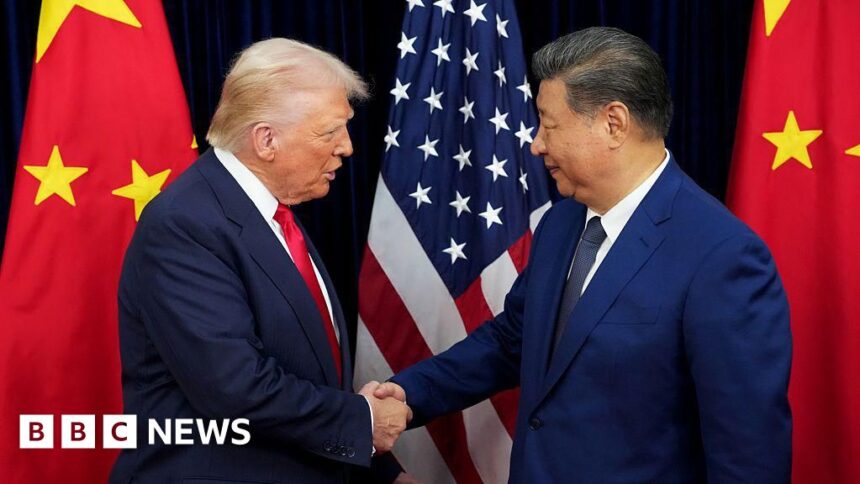
China has announced plans to ease its export ban on automotive computer chips, a crucial component in global car production. This development is part of a broader trade agreement reached during the recent meeting between President Xi Jinping and former President Donald Trump in South Korea. The White House has provided details on the deal, which also includes commitments regarding U.S. soybean exports, the supply of rare earth minerals, and addressing the materials associated with the production of fentanyl.
The agreement marks a significant step in de-escalating the trade tensions between the U.S. and China, which have been exacerbated by tariffs imposed by the Trump administration earlier this year. These tariffs ignited a series of retaliatory measures, creating instability in global business operations. Following the leaders’ discussions, Trump described the negotiations as “amazing,” while Chinese officials stated they had reached a consensus to tackle “major trade issues,” without immediately disclosing the specifics of the agreement.
Highlighting the automotive industry, the exporters significantly impacted by the ban are Nexperia, a company with production facilities in China that is essential for delivering computer chips. Concerns had surfaced regarding the potential disruption in the supply chain due to the restrictions. The White House fact sheet noted that China would implement measures to resume trade at Nexperia’s facilities, facilitating the flow of critical legacy chips needed for automotive manufacturing.
In a related move, China indicated it is considering exemptions for certain firms from the export ban. Recent alerts from major automotive players, such as Volvo and Volkswagen, had warned of impending production halts due to chip shortages, while Jaguar Land Rover expressed that the lack of chips posed serious challenges to their operations.
The agreement also addresses other pressing trade issues, including a year’s suspension of export controls on rare earth minerals from China, which are vital for producing not only cars but also airplanes and various technological and defense equipment. In return, the U.S. will reduce tariffs aimed at curbing the import of fentanyl. China has pledged to take substantial measures to tackle this issue, as fentanyl—with a composition of chemicals primarily sourced from China—has become a leading cause of opioid overdose deaths in the United States.
Additionally, on agricultural matters, China has committed to purchasing 12 million tons of U.S. soybeans in the final two months of 2025, and an increased amount of 25 million metric tons annually over the subsequent three years. This move comes after China halted soybean imports from the U.S. earlier this year, significantly impacting American farmers who rely on this market. In response to the trade disruption, Trump reinstated a government bailout program for farmers reminiscent of relief measures from his previous term in office.