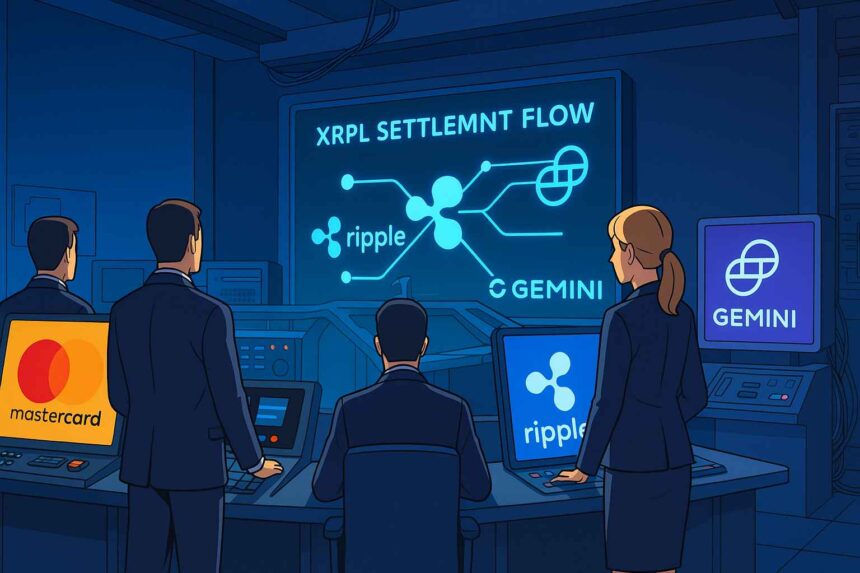
Mastercard has announced a groundbreaking collaboration with Ripple and Gemini aimed at revolutionizing credit card transaction settlements through the RLUSD stablecoin on the XRP Ledger. This initiative will connect Gemini’s credit card, issued via WebBank, to a blockchain-based settlement system where RLUSD will facilitate transactions instead of relying on traditional bank transfers.
The rollout of this transformative project is anticipated within the coming months, pending necessary regulatory reviews and onboarding of the participating partners. This move is significant as it represents one of the first instances where a fully regulated U.S. bank will engage with a public blockchain for settling fiat-based transactions. For Mastercard, this development underscores a growing interest in compliant stablecoins that adhere to existing payment frameworks.
In a recent announcement via social media, Ripple confirmed the collaboration, highlighting the introduction of RLUSD settlement for fiat credit card payments beginning with the Gemini XRP Credit Card. The XRP Ledger is poised to offer the necessary public infrastructure to facilitate these settlements, while RLUSD, backed by U.S. dollars and short-term government securities, is positioned as an optimal choice for institutional payment flows.
The process for consumers appears straightforward. When a user swipes their Gemini card, the transaction will be processed on XRPL using RLUSD, eliminating the need for conventional banking channels. Ripple’s ledger will efficiently manage and document the transfer, offering a more transparent and immediate alternative to traditional batch-based clearing.
While cardholders won’t notice immediate changes, the technological shift aims to deliver benefits to institutions and payment providers. The pilot project will assess whether this blockchain-based approach enhances settlement speed, reduces costs, and simplifies auditing processes, all while maintaining the current user experience.
However, the initiative is still in its pilot phase and faces several hurdles. Regulatory approval is essential, and RLUSD must establish sufficient liquidity to accommodate real settlement volumes. Furthermore, ensuring seamless integration of XRPL with Mastercard’s existing systems is crucial to the project’s success, all while avoiding new compliance or operational risks.
If successful, this initiative could pave the way for broader acceptance of blockchain technology in conventional finance. Although it doesn’t suggest an immediate shift of everyday card payments to blockchain, it highlights the potential for legacy payment systems and public blockchain infrastructure to converge more closely than previously anticipated. The results could significantly influence the movement of digital dollars among banks, merchants, and consumers in the future.
In summary, this collaboration between Mastercard, Ripple, and Gemini has the potential to set new standards for how credit card transactions can be settled—if they can navigate the regulatory landscape and integrate smoothly into current financial systems.