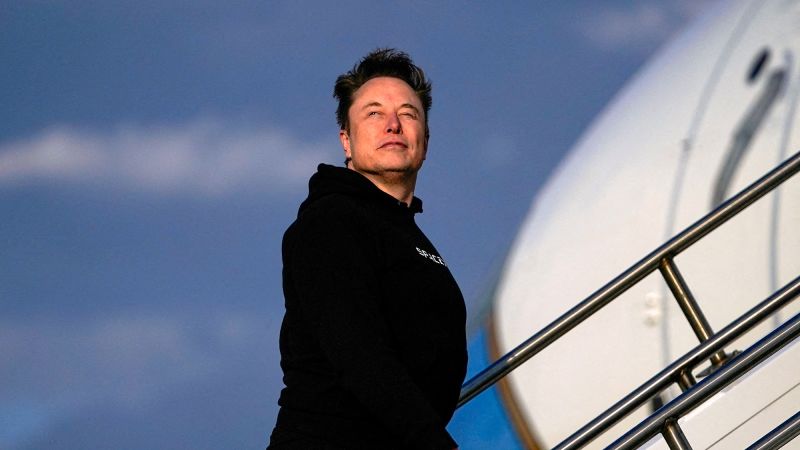
Tesla’s recent shareholder approval of an ambitious pay package for CEO Elon Musk could pave the way for him to become the world’s first trillionaire over the next decade. This milestone is contingent upon the company achieving ambitious targets, including a staggering 466% increase in its market capitalization. While the feasibility of such growth remains a topic of debate among analysts and investors, the mere possibility is significant enough to warrant discussion about the implications of a trillion-dollar fortune.
The concept of “trillion” has seen considerable media attention, often used as shorthand for vast wealth. However, the actual size of a trillion is so immense that it often eludes comprehension. For perspective, consider that spending $40 every second around the clock would still leave you with a billion dollars after 289 days; in contrast, spending the same amount would take 792.5 years to deplete a trillion. This stark difference illustrates just how astronomically large the number is.
In exploring what a trillion dollars could buy, the figures are staggering. For instance, one could afford to buy 1,428 elite baseball player Shohei Ohtani, whose recent contract totals $700 million. Alternatively, with a trillion dollars, you could purchase every car sold in the United States this year—a prospect that seems impractical since cars depreciate in value the moment they leave the lot.
Moreover, one could technically acquire 10,000 Starbucks CEOs, given that the company’s head earns nearly $100 million. The potential purchases extend to grand real estate: one could construct approximately 333 supertall skyscrapers similar to the new JPMorgan Chase headquarters valued at $3 billion. Additionally, you could amass 2,000 luxury yachts like those owned by Jeff Bezos, or create a personal fleet as large as 465 of the world’s largest cruise ships.
Beyond individual consumer goods, a trillion dollars could also transform educational institutions, allowing one to buy the entire Ivy League five times over, with a collective endowment of around $200 billion. The financial implications further include the playful idea of gifting every person in the U.S. a $2,923 bonus, though that would likely face challenges given the complex implications of inflation.
Other notable purchases include entire nations—with Switzerland’s annual GDP near $900 billion—more households than exist in Hawaii, which number around 572,781, and even several major automotive and oil companies. The hypothetical purchasing power encapsulates both the allure and absurdity of staggering wealth in today’s economy.
As we navigate through an era where immense wealth becomes increasingly common at the top, such astronomical numbers challenge our understanding of money itself. The trend highlights a disconnect between the financial realities of the ultra-wealthy and the average citizen. In a curious twist, this even positions today’s vast national debt of $38 trillion in a different light—suggesting that it could be considered just 38 potential Elon Musks or 7.5 Nvidias, making the figure seem almost reasonable by comparison. As wealth accumulation reaches dizzying heights, it raises poignant questions about the future of wealth distribution and economic balance.