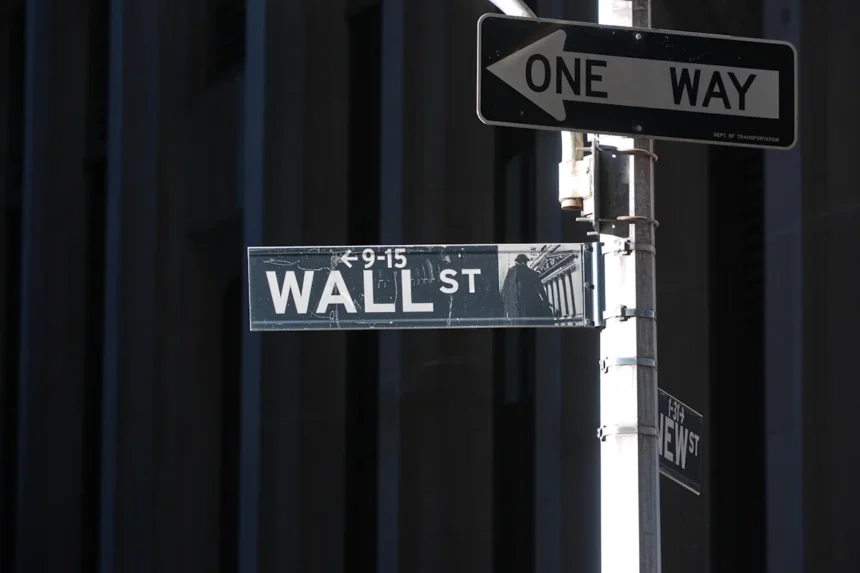
U.S. stock markets experienced significant declines on Friday, primarily driven by a resurgence of a tech-led sell-off. As investors grapples with concerning consumer sentiment data and uncertainties surrounding the sustainability of the AI investment boom, the tech-heavy Nasdaq Composite (^IXIC) took the brunt of the losses, dropping approximately 1.8%. The S&P 500 (^GSPC) and the Dow Jones Industrial Average (^DJI) fell around 1% and 0.6%, respectively.
This latest downturn marks a precarious week for stocks, which are set to close in the red due to persistent fears of an AI bubble as valuations of major technology companies remain elevated. The S&P 500 and the Dow are on track for notable weekly losses, while the Nasdaq could register its largest decline since April, influenced by significant downturns in well-known tech firms including Nvidia (NVDA).
Investor sentiment was further dampened by a bearish consumer sentiment report from the University of Michigan, indicating a drop to 50.3 in November—a 6% decrease from the previous month and the lowest level since 2022. This decline reflects a worsening outlook among consumers regarding their personal finances and expectations for future business conditions. This sentiment drop comes on the heels of October job cuts reaching their highest level for the month in over two decades, hinting at a challenging job market.
The financial landscape is complicated by the ongoing government shutdown, which has delayed the release of key economic data, including the October jobs report, for the second consecutive month. Traditionally reliable indicators are scarce, leaving investors anxious over the economic outlook.
In a notable development within the tech sector, Tesla (TSLA) recently approved a staggering $1 trillion pay package for CEO Elon Musk, stirring both intrigue and skepticism in the markets. Tesla shares saw a 4% dip as investors began to weigh the ambitious growth targets linked to Musk’s pay deal, which aims at driving growth for the company’s electric vehicle line and developments in robotics. There are pressing expectations for Musk to fulfill promises regarding Tesla’s robotaxi service and the Optimus humanoid robot.
Despite these challenges, potential catalysts on the horizon have caught the attention of investors, including the possibility of an end to the government shutdown, potential interest rate cuts in December, and Nvidia’s upcoming earnings announcement, which could help stabilize market sentiment. However, the ongoing scrutiny of President Trump’s tariff policies, currently under review by the Supreme Court, adds an additional layer of uncertainty.
Oil prices, meanwhile, staged a slight recovery following three consecutive sessions of losses. Crude futures showed a turnaround as traders reacted to OPEC+’s recent decisions regarding production levels. Brent crude futures gained about 0.4%, trading around $63.60, while U.S. benchmark West Texas Intermediate crude rose by over 0.5% to approximately $59.75. Nevertheless, prices are still on course for a steep weekly decline exceeding 2%.
The “Magnificent Seven” tech stocks continue to face heavy selling pressure amid growing skepticism regarding high valuations linked to the AI boom. Nvidia, a front-runner in the semiconductor field, experienced a nearly 3% drop on Friday. This downturn follows comments from officials suggesting there would be “no federal bailout for AI,” alongside concerns raised by CEO Jensen Huang regarding the potential loss of momentum in the AI race against China. Other notable tech stocks, including Meta (META) and Microsoft (MSFT), have similarly struggled, all reflecting a broader market trend of declining confidence in the sustainability of the current tech stock valuations.
In broader market activity, various earnings reports influenced trading. Opendoor Technologies (OPEN) saw its stock plummet 20% following a disappointing quarterly revenue report, while Block (XYZ) shares failed to meet expectations, declining 12% amid concerns over the profitability of its Square payments unit. Conversely, some companies like Airbnb (ABNB) and Wendy’s (WEN) reported strong performance, with respective increases in their stock prices, underscoring the mixed landscape as corporate earnings season progresses.
As the market adapts to these developments, traders are paying close attention to indicators that may signal a shift in the current bearish sentiment, weighing both earnings results and economic indicators as they emerge from the ongoing market turbulence.